The City Wall can be visited
Town FortificationRetz
Town Fortification Retz
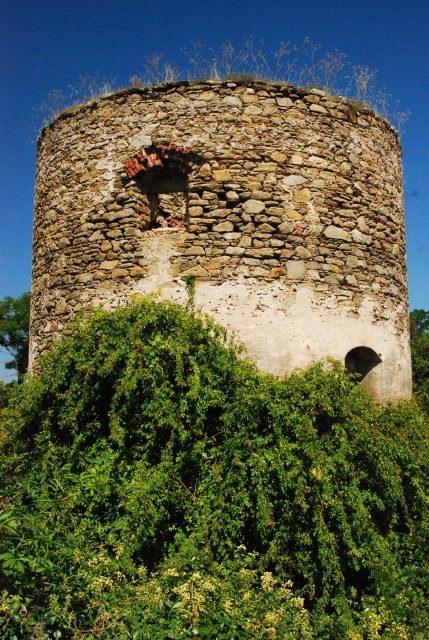
Retz developed from two settlements. The origins of the northern part date back to a village called Recze, first mentioned in a document in 1180, which was grouped around the elevated parish church of St. Stephen and belonged to the dominion of the Counts of Plain-Hardegg. The Counts of Hardegg, Otto and Konrad von Plain, had already appropriated the toll right before the town's founding. Therefore, a free court stood here, for whose protection they built a castle on a slightly elevated spot.
To the south, between 1280 and 1290, a systematically planned new settlement emerged with a large rectangular square, mighty fortifications, and a Dominican monastery. The castle was integrated into the northwestern corner of the town's fortifications.
The founder of the "New Town" was Count Berthold von Rabenswalde-Schwarzburg. He married the widow of Otto von Hardegg, the last Hardegger died in 1260 and was enfeoffed by King Rudolf I in 1278 with the immediate county of Hardegg. As Berthold's successors, the Burgraves of Maidburg, related to him, were lords of the County of Hardegg and the dominion of Retz until the end of the 15th century, their castle usually being their seat. The castle, like the entire town, was destroyed by the Hussites in 1425. In the rising masonry of the castle ruins, a gate remained recognizable in the west. Due to inheritance contracts, Retz, with the County of Hardegg, became princely in 1481. In 1509, the town was pledged to the Eitzinger family, who were followed by the Prüschenk-Hardegg in 1534. In the 16th century, the old castle area was converted into a farmstead (Meierhof), and a large tower was mentioned, the remains of which are likely the still existing rondel today. In 1709, after several changes, Retz came into the possession of the Counts of Gatterburg.
The town's fortifications consisted of a high inner town wall with battlements; in front of it, somewhat lower, lay the Zwinger (outer bailey) with Zwinger walls extending into the moat. Of the two gate towers, the southern one (Kremser Tor) was demolished down to the archway in 1842. In the northern one (Znaimer Tor), there is an iron grate in a Gothic niche. This tower might have been completed around 1300. The four corner towers only supplemented the town's fortifications from the 15th and 16th centuries, respectively. Today, only fragments of them remain. The two outworks, which were built in front of the two town gates, were demolished in the 19th century. The eastern town wall was used as a quarry.
Take Mobile History with you
You are reading this text for free. Premium adds what matters on the road: descriptions read aloud, sites found through your camera, whole regions taken offline.
- Every description, including the ~17,700 Premium sites
- Audio guide: have descriptions read to you on location
- AR finder: see sites through your camera, with distance and bearing
- Unlimited saved sites
14 days free, then from €2.99 a month. Cancel anytime.
Source: Wikipedia · Licence: CC BY-SA 4.0 · Image: http://commons.wikimedia.org/wiki/File:GuentherZ_2010-08-21_0166_Retz_Haberfelderturm_Tafel.jpg?uselang=de
This description draws on the facts documented in the linked Wikipedia article; Wikipedia content is licensed under CC BY-SA 4.0. Wording and editing: Mobile History.
Location: 48.7563, 15.9479