Archaeological remains
MonasteryMainz
St. Gangolf
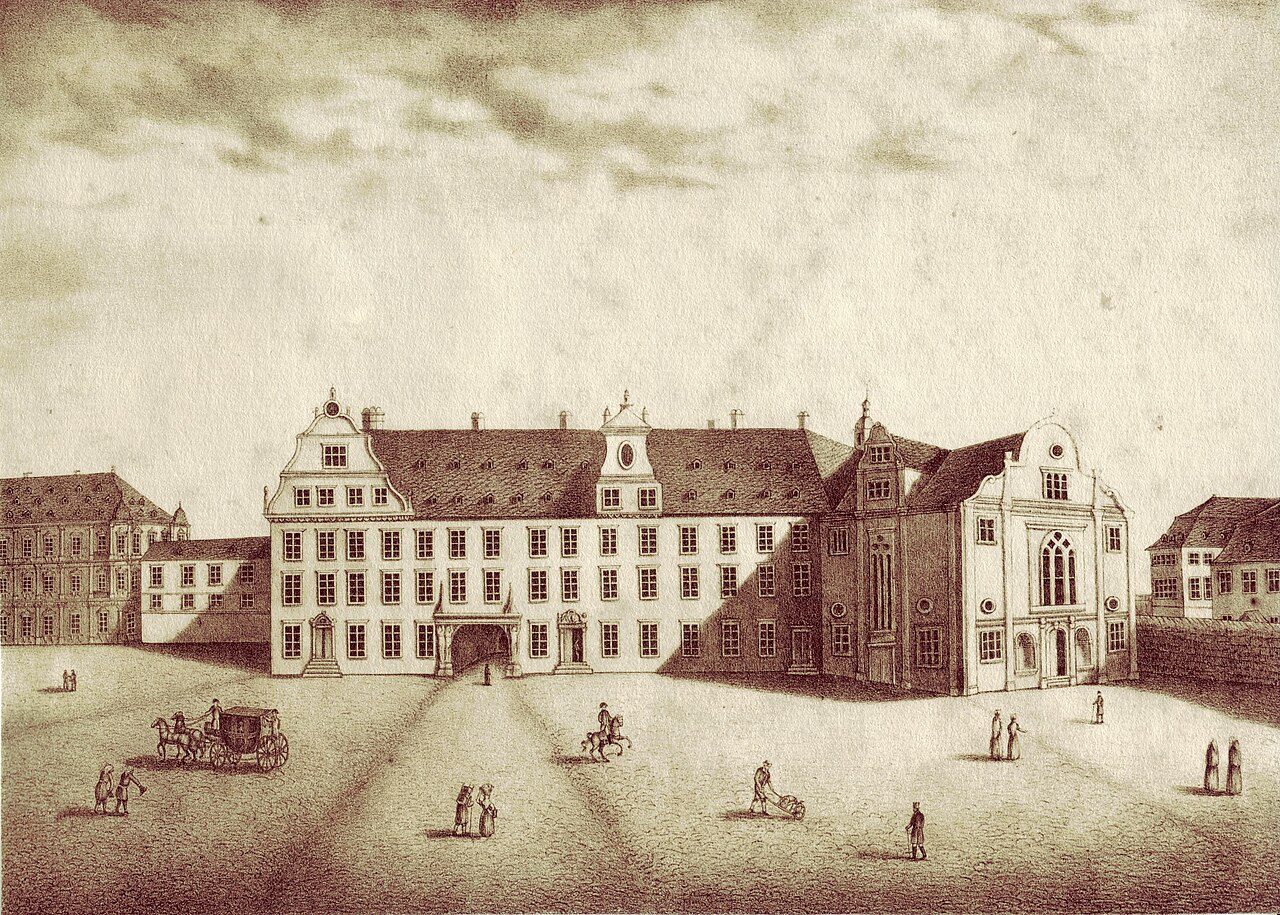
The former collegiate monastery of St. Gangolf in Mainz, Rhineland-Palatinate, was a significant spiritual institution whose origins date back to the Early Middle Ages. It was characterized by its close connection to the Archbishops of Trier and later Mainz, playing a role in the city's development.
History+
Following the surmounting of the Norman invasions in the early Middle Ages, the collegiate monastery of St. Gangolf was established in the northern, walled area of Mainz, near the confluence of the Zeybach with the Rhine. The Mainz Cathedral Provost Theoderich, who later became Archbishop of Trier, founded the complex. A document from Otto I dated May 29, 961, confirms Theoderich's role as Cathedral Provost and the transfer of estates in the Nahegau, which he used to equip the monastery. The church and associated buildings were constructed for twelve canons. Until the High Middle Ages, the monastery remained the private property of the respective Bishops of Trier. Theoderich, who also had a Gangolf church built in Trier, died in Mainz in 977 and was buried in St. Gangolf. In 1570, the monastery became the property of the Mainz Archbishop Daniel Brendel von Homburg. Between 1575 and 1581, he had it converted into a castle chapel for the Martinsburg fortress by the Mainz cathedral master builder Georg Robin in Renaissance style. The three-aisled hall church, with its gallery and high tracery windows, housed richly carved choir stalls, which were later moved to Mainz Cathedral. Since 1436, the Dean of St. Gangolf held the office of an ordinary conservator of the Teutonic Order's privileges. During the Siege of Mainz in 1793, St. Gangolf Church was severely damaged and later fell victim to French urban planning.
Location+
The former monastery of St. Gangolf was located in the city of Mainz, which is in the federal state of Rhineland-Palatinate, Germany. It was situated in the northern part of the walled city area, near where the Zeybach flowed into the Rhine.
On site+
Today, only archaeological remains of the former St. Gangolf monastery complex exist. During renovation work on the Deutschhaus in 2017, discoveries were made that confirmed the course of the Roman city wall and unearthed remnants of the former St. Gangolf Church.
Nearby+
- Palais Deutschordenshaus (Residence, approx. 81 m away)
- Kurfürstliches Schloss (Castle, approx. 86 m away)
- Palais Eltzer Höfe (Residence, approx. 317 m away)
- Palais Dienheimer Hof (Residence, approx. 350 m away)
Take Mobile History with you
You are reading this text for free. Premium adds what matters on the road: descriptions read aloud, sites found through your camera, whole regions taken offline.
- Every description, including the ~17,700 Premium sites
- Audio guide: have descriptions read to you on location
- AR finder: see sites through your camera, with distance and bearing
- Unlimited saved sites
14 days free, then from €2.99 a month. Cancel anytime.
Location: 50.0060, 8.2712