Cultural Events
MonasteryNortheim
St.-Blasien Abbey
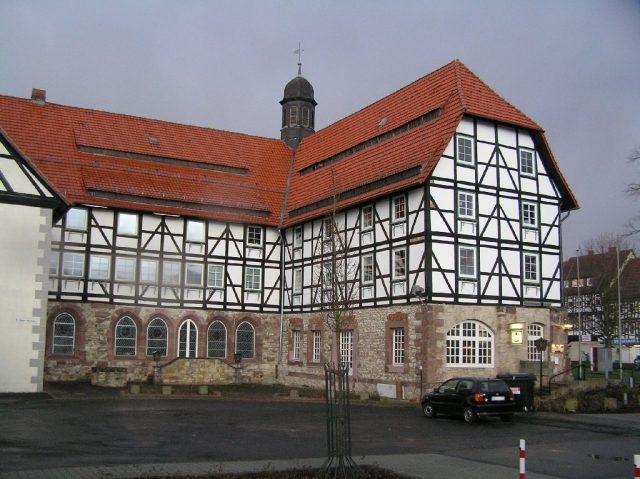
The St. Blasien Monastery (named after Saint Blaise of Sebaste), of which today only the so-called St. Blasien Complex remains, is located in the city center of Northeim.
Crucial for the founding of St. Blasien Monastery (around 1100) was the wish of Count Otto of Northeim (died 1083), which, however, was only realized after his death by his sons in the County of Northeim. Initially founded as a collegiate church, it was converted into a Benedictine monastery a little later.
The convenient location at the intersection of two old trade routes soon led to the formation of a market settlement, which formed the nucleus of Northeim and favored its development into a city. City rights were granted in 1252.
In the 15th century, the Reinhausen monk Johannes Dederoth entered the monastery, who later reformed Bursfelde Abbey as abbot and thus gave the impetus for the founding of the Bursfelde Congregation, a significant association of Benedictine convents. After his return, Dederoth initially introduced the Congregation to Reinhausen Abbey, as his fellow monks could not yet be won over to a stricter monastic discipline. After Dederoth's death in 1439, Johannes von Hagen († 1469) continued his office; a year later, the Congregation was recognized by the church. However, it was not until 1464 that the St. Blasien Monastery also joined this Congregation. The background to the reformation was the Devotio moderna, with the help of which the rigid liturgy of the Benedictines found new, internalized forms of expression.
The convent resisted the introduction of Lutheranism during a visitation in 1541/42, initiated by Duchess Elisabeth of Braunschweig. However, the monastery was already in dissolution at that time; after the abbot died in 1545, only four brothers lived in the establishment. The number may have increased slightly in the following years, but the plague epidemics of 1552/53 and 1565/66 carried most of them away. In 1570, however, the last abbot Johann Beckmann gave up and left Northeim, which extinguished monastic life in St. Blasien Monastery, except for a brief interlude in 1629 during the Thirty Years' War. Since 1541, the administration of the estates had been carried out by an official of the Duchess.
Large parts of the former monastery complex fell into disrepair over time and were removed as part of the inner-city modernization in the 1970s.
Condition+
The St. Blasien Complex, which has been preserved to this day, was taken over by the city of Northeim in 1975 and extensively restored. Today, it houses, among other things, the St. Blasien Chapel, completed in 1517. This is the former sacristy of the never-built Northeim Minster Church and has been continuously dedicated to religious purposes since its completion.
The building also houses the Citizens' Hall, established in 1982, for festive receptions of the city of Northeim and smaller cultural events. This room is named after the Citizens' Hall of the medieval town hall on the market, which burned down in 1832.
Furthermore, the registry office, the citizens' office, the Federal Homeland Group Neustadt/OS (today's Prudnik in Poland), and the "Klosterschänke," a restaurant with a medieval vaulted cellar, have their place there.
Take Mobile History with you
You are reading this text for free. Premium adds what matters on the road: descriptions read aloud, sites found through your camera, whole regions taken offline.
- Every description, including the ~17,700 Premium sites
- Audio guide: have descriptions read to you on location
- AR finder: see sites through your camera, with distance and bearing
- Unlimited saved sites
14 days free, then from €2.99 a month. Cancel anytime.
Location: 51.7058, 9.9973