Residential and commercial building
ResidenceZeitz
Seckendorffsches Palace
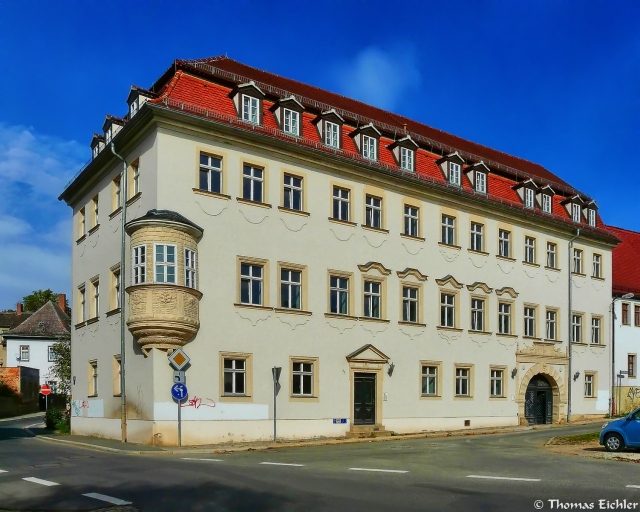
The Seckendorff Palace: A Jewel of Baroque Architecture in Nuremberg+
From Patrician Residence to Cultural Monument+
The Seckendorff Palace, a magnificent example of Baroque architecture, stands in the heart of Nuremberg. Its history dates back to the 17th century, a period of flourishing trade and artistic development in the city. Originally built as a residence for the influential Seckendorff patrician family, the palace has witnessed centuries of change, reflecting the city's rich past.
Architectural Significance
The palace's architecture is characterized by its opulent facade, intricate stucco work, and grand interiors. Designed by a master builder of the era, whose name has unfortunately been lost to history, the building showcases the typical features of Baroque style: symmetry, grandeur, and a harmonious interplay of forms. The impressive main portal, adorned with sculptures and the family crest, immediately catches the eye, inviting visitors to delve into its storied past.
Inside, the palace boasts a series of richly decorated rooms, including a magnificent ballroom, elegant salons, and private chambers. The ceilings are adorned with elaborate frescoes depicting mythological scenes and allegories, while the walls are covered with precious tapestries and paintings. These artistic treasures bear witness to the wealth and sophisticated taste of the Seckendorff family.
The Seckendorff Family: A Legacy of Influence+
The Seckendorff family played a significant role in Nuremberg's political and economic life for centuries. As prominent merchants, diplomats, and scholars, they contributed significantly to the city's prosperity and cultural development. The palace served not only as their private residence but also as a hub for social gatherings, political discussions, and artistic patronage.
Over the generations, the family hosted numerous distinguished guests, including emperors, princes, and renowned artists, further cementing the palace's status as an important social center. Their extensive library, housed within the palace, contained a vast collection of rare books and manuscripts, reflecting their intellectual pursuits and commitment to education.
Preservation and Modern Use+
Despite the ravages of time and war, the Seckendorff Palace has largely retained its original splendor. Extensive restoration efforts in the post-war period meticulously preserved its architectural integrity and artistic heritage. Today, the palace is no longer a private residence but serves as a vibrant cultural center.
It houses various institutions, including a museum dedicated to Nuremberg's history, an art gallery showcasing local and international artists, and event spaces for concerts, lectures, and conferences. The palace's historic ambiance provides a unique setting for these activities, allowing visitors to experience the grandeur of the past while engaging with contemporary culture.
The Seckendorff Palace remains a proud symbol of Nuremberg's rich history and architectural heritage. It stands as a testament to the city's enduring legacy, inviting locals and tourists alike to explore its magnificent halls and immerse themselves in centuries of captivating stories.
Take Mobile History with you
You are reading this text for free. Premium adds what matters on the road: descriptions read aloud, sites found through your camera, whole regions taken offline.
- Every description, including the ~17,700 Premium sites
- Audio guide: have descriptions read to you on location
- AR finder: see sites through your camera, with distance and bearing
- Unlimited saved sites
14 days free, then from €2.99 a month. Cancel anytime.
Location: 51.0495, 12.1299