To be privately owned
CastleGarbsen - Schloss Ricklingen
Ricklingen Castle
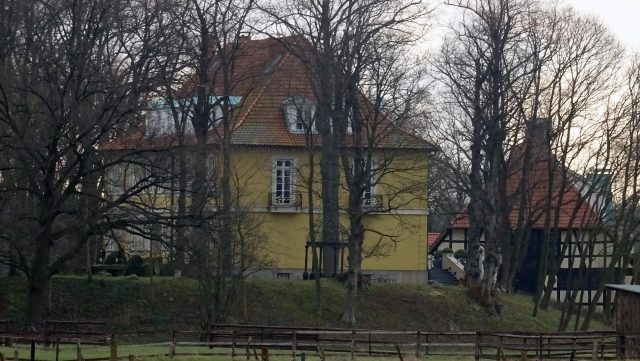
In 1225, Marienwerder Abbey grants 20 Marks (10 pounds of silver) to Count Conrad von Roden so that he can build a fortress. He names it Ricklingen in memory of his ancestors, the noble lords of Ricklingen. The village of Ricklingen develops alongside it. In 1235, Count von Roden calls himself Count von Wunstorf. In 1303, Count von Wunstorf cedes the Ricklingen fortress to the Bishop of Minden; however, he receives it back as a fief. In 1333, Count Johannes von Wunstorf is forced to cede the property on the right bank of the Leine to Duke Otto from the Old House of Lüneburg. This establishes the ducal office of Ricklingen with the villages of Berenbostel, Garbsen, Havelse, Horst, Leistlingen, Meyenfeld, Osterwald, Ricklingen, Stelingen and, until 1520, also Bordenau and Frielingen. After the death of Duke Wilhelm von Lüneburg in 1369, the so-called Lüneburg War of Succession begins. On one side are Duke Magnus II of Braunschweig and later his heirs, and on the other, Duke Albrecht of Saxony-Wittenberg and his uncle Wenzel. In 1381, Dietrich von Mandelsloh lends money to the heirs of Duke Magnus II and receives Ricklingen as collateral. The war only ends with Wenzel's death in 1388. The citizens of Hanover support Albrecht and rob Dietrich von Mandelsloh. He files a complaint before an arbitration court but also defends himself. Albrecht wants to punish him for this resistance. In 1385, Albrecht besieges Ricklingen Castle. Stones are hurled from the castle with a trebuchet, which, according to legend, Dietrich's daughter Sophie is said to have operated. Albrecht is hit, severely wounded, and taken to Neustadt Castle. He dies there. Hermann Löns, who often bowled at the Gasthaus zur Linde, sings about Sophie's deed in a ballad. In 1399, the Dukes of Braunschweig-Lüneburg have the "Vogteihaus" (bailiff's house) built on the castle grounds. In 1635, Jakob Voigt builds his stately residence (where the "Schloss" stands today). In 1640, Jakob Voigt becomes the administrator of Ricklingen. Johann Georg Voigt, Jakob's son, bailiff in Neustadt, also becomes bailiff in Ricklingen in 1689. He has the church, the rectory, and a school built. In 1692, construction work begins for the church, which is consecrated on October 16, 1694. In 1709, Christian Friedrich Wedekind (poet's name "Crescentius Koromandel") is born in Ricklingen as the son of Pastor Wedekind. "Krambambuli" is his most famous song. In 1752, the old Vogteihaus is replaced by a new building. This administrative building is called "Schloss" today. In 1850, to distinguish it from the village of "Ricklingen" of the same name, a present-day district of Hanover, the name is changed to "Schloss Ricklingen". In 1851, a special district court is established in Schloss Ricklingen. In 1852, the royal office of Ricklingen is merged with the office of Neustadt. In 1894, ferry operations cease. District Administrator von Woyna opens a bridge over the Leine. In 1974, independence ends: Schloss Ricklingen becomes a district of Garbsen.
Take Mobile History with you
You are reading this text for free. Premium adds what matters on the road: descriptions read aloud, sites found through your camera, whole regions taken offline.
- Every description, including the ~17,700 Premium sites
- Audio guide: have descriptions read to you on location
- AR finder: see sites through your camera, with distance and bearing
- Unlimited saved sites
14 days free, then from €2.99 a month. Cancel anytime.
Location: 52.4244, 9.5065