To be privately owned
CastleLandsberg-Petersdorf
Petersdorf Castle
The Historic Building: A Journey Through Time+
From Medieval Origins to Renaissance Splendor+
The history of the building, often referred to as "Schloss Wartenstein," dates back to the 12th century. Originally a medieval fortress, it served as a strategic stronghold guarding the trade routes along the river. Over the centuries, it underwent numerous transformations, reflecting the changing architectural styles and the evolving needs of its inhabitants.
During the Renaissance, the fortress was converted into a magnificent palace, adorned with elaborate frescoes, ornate carvings, and sprawling gardens. It became a center of culture and learning, attracting artists, scholars, and dignitaries from across Europe.
Turbulent Times and Changing Hands+
The 17th and 18th centuries brought a period of unrest and conflict. The building was repeatedly besieged, damaged, and rebuilt, bearing witness to the Thirty Years' War and other regional conflicts. Its ownership changed hands multiple times, passing through various noble families, each leaving their mark on its architecture and legacy.
In the 19th century, the building experienced a revival. It was extensively renovated and modernized, incorporating elements of Neo-Gothic and Romantic architecture. It served as a private residence for a prominent industrialist family, who hosted lavish balls and cultural events, further enhancing its reputation as a symbol of prestige and elegance.
The 20th Century: War, Expropriation, and New Beginnings+
The 20th century brought significant challenges and changes. During World War II, the building suffered considerable damage, but fortunately, it was not completely destroyed. However, the post-war period brought a dramatic turn of events.
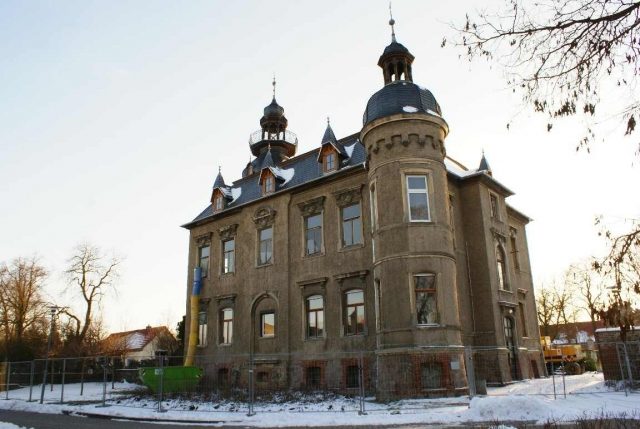
The castle was built in 1896 on the walls of a predecessor building. In 1945, the owners were expropriated and expelled by the communists.
After decades of neglect, the building was finally acquired by the state in the late 20th century. Extensive restoration efforts were undertaken to preserve its historical integrity and architectural beauty. Today, it stands as a testament to its rich past, serving as a museum and cultural center, open to the public for guided tours, exhibitions, and events.
Architectural Highlights and Unique Features+
The Grand Hall
The Grand Hall, with its soaring ceilings, intricate stucco work, and impressive fireplace, is a masterpiece of Renaissance architecture. It was once the setting for grand banquets and ceremonial gatherings, and today, it hosts concerts and cultural events.
The Castle Chapel
The Castle Chapel, a serene and intimate space, features stunning stained-glass windows and a beautifully carved altar. It has been a place of worship for centuries and continues to be used for special services and ceremonies.
The Gardens
The sprawling gardens, meticulously maintained, offer a tranquil retreat with their manicured lawns, fragrant rose bushes, and ancient trees. They provide a picturesque backdrop for leisurely strolls and outdoor events.
Take Mobile History with you
You are reading this text for free. Premium adds what matters on the road: descriptions read aloud, sites found through your camera, whole regions taken offline.
- Every description, including the ~17,700 Premium sites
- Audio guide: have descriptions read to you on location
- AR finder: see sites through your camera, with distance and bearing
- Unlimited saved sites
14 days free, then from €2.99 a month. Cancel anytime.
Location: 51.5405, 12.1350