Cultural facilitie
Educational Institution
CastleNoer
Noer Castle
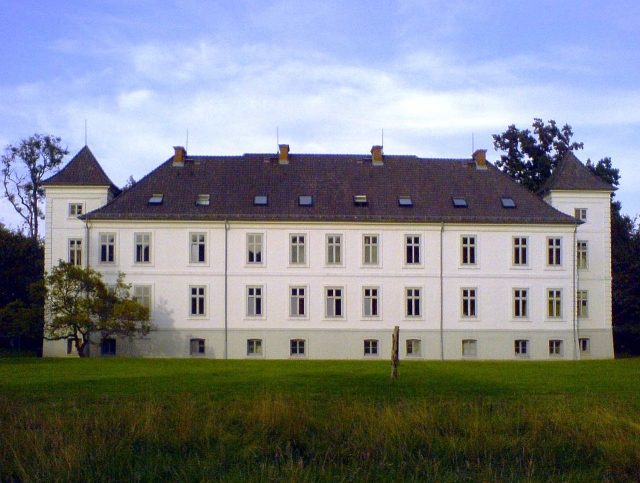
Schloss Noer in Noer, Schleswig-Holstein, was once the manor house of an estate. After the owners of the estate changed several times over the centuries, agricultural operations ceased in the 20th century, and Schloss Noer now serves as a youth education and meeting center. While the castle is open to house guests in this context, it is usually not accessible to visitors, with the exception of the courtyard.
Noer was owned by various ancient noble families of Schleswig-Holstein since the Middle Ages. From 1417 to 1610, it belonged to the Ahlefeld family, until 1675 to the Rantzau family, briefly also to the Rumohr family, and then from 1680 to 1763 to the Brockdorff family. The predecessor of the current castle was built at the beginning of the 18th century to replace an older seat in neighboring Grönwohld. In 1763, the estate came into the possession of the Counts Moltke, under whose rule serfdom was abolished in Noer. In 1832, Noer was acquired by the Danish Princess Louise Auguste to serve as a residence for her second son, Friedrich Emil August. The so-called Prince of Noer served as Danish governor and subsequently played a significant role in the uprising against Denmark from 1848. As a result of these events, Friedrich Emil August went into exile. After the end of Danish rule in 1864, the Prince was appointed Prince of Noer, and Noer became the family seat of his line.
In the 20th century, numerous changes took place on the estate. The manorial rule in Noer was dissolved from 1928, and the village of the same name emerged from the Noer estate district; the lands were leased. In 1933, the castle partially burned down in a large fire and was subsequently renovated. In 1960, the property was handed over by Ehrengard Countess zu Rantzau to the Schleswig-Holsteinische Gesellschaft für Einrichtungen der Jugendpflege e.V., and a youth education and meeting center was established on the former estate, which still exists today.
Buildings+
The Castle
According to an old definition, only the buildings of the regional rulers in Schleswig and Holstein were actually called castles; the residences of the landed gentry, to which Noer belongs, were therefore to be referred to as manor houses. However, this rule was not universally applied, including in Noer, which also came into royal possession in the 19th century through Princess Louise Auguste and is known to this day as Schloss Noer.
The current castle, in its basic features, still originates from the building that was constructed under Joachim von Brockdorff from 1708 to 1711, along with the courtyard complex. The building was extended and rebuilt several times over the centuries; for example, the side towers were only added at the beginning of the 20th century. The central part of the castle was largely destroyed in a fire in 1933 and subsequently rebuilt in an approximately Baroque style, based on its old form, with the shape of the roof simplified. It is a broadly laid out, two-story building with thirteen window axes, whose narrow sides are flanked by a three-story tower each. The representative show facade faces the courtyard and is adorned with a segmental pediment; the main portal is located under a central portico. The rear facade faces the garden and largely dispenses with architectural ornamentation. Inside, the old room layout was preserved even after the fire, although due to its current use, there are hardly any traces of the original furnishings. The most important interior room is the garden hall, which follows the vestibule, whose wall paneling decorated in the Zopfstil dates from the second half of the 18th century. Some smaller salons with Rococo-style stucco were restored after the fire.
The Courtyard Complex and the Park
Opposite the castle, several 18th-century buildings are preserved, which were created together with the new construction of the courtyard complex at that time. These are the so-called Inspector's House and the Riding Stable, which have now been incorporated into the operation of the meeting center and serve as leisure and accommodation houses.
West of the castle is an English-style landscape garden that extends into the nearby forest area and from there to the Eckernförde Bay. The garden complex also serves the meeting center today. The park is structured with lawns and groups of trees; a small mausoleum was built as contemporary garden architecture in the second half of the 19th century. This building was designed by Heinrich Moldenschardt, a student of Semper, and served as the burial place for Count Friedrich Carl August von Noer and his wife Carmelita.
Take Mobile History with you
You are reading this text for free. Premium adds what matters on the road: descriptions read aloud, sites found through your camera, whole regions taken offline.
- Every description, including the ~17,700 Premium sites
- Audio guide: have descriptions read to you on location
- AR finder: see sites through your camera, with distance and bearing
- Unlimited saved sites
14 days free, then from €2.99 a month. Cancel anytime.
Source: Wikipedia · Licence: CC BY-SA 4.0 · Image: http://de.wikipedia.org/wiki/Datei:Schloss_Noer_Garten.jpg
This description draws on the facts documented in the linked Wikipedia article; Wikipedia content is licensed under CC BY-SA 4.0. Wording and editing: Mobile History.
Location: 54.4618, 10.0020