To be privately owned
CastleLehsen
Lehsen Castle
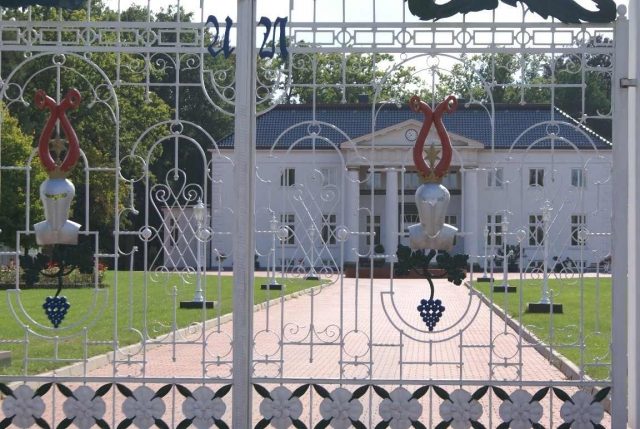
Lehsen was first mentioned in 1233 in the Ratzeburg tithe register in the parish of Wittenburg. It was not until the Bede register of 1496 that 16 families were again named in to Lessen (Lehsen).
In the Middle Ages, Lehsen was a fief of the von Blücher family until 1690. In 1635, Heinrich von Blücher asked the Duke for permission to fell 100 oak trees in Eickmanßhorst. In 1638, permission was granted with the note that this would help the ruined Lehsen estate recover. The former knight's estate was located near the present-day mausoleum.
From 1690, the von Laffert family, originally from Braunschweig and Wolfenbüttel, acquired land in western Mecklenburg.
In 1701, court and privy chamberlain Wigand von Laffert received the enfeoffment letter for the Lehsen estate. After the establishment of the Fideikommiss in 1723, the von Laffert family owned the estate for another six generations. Under Hofrat Ludolph Friedrich von Laffert, who also bought the Dammereez fiefdom in 1769, far-reaching changes occurred in Lehsen. His son, Chamberlain Ernst August von Laffert of Lehsen, Garlitz, Wittorf, and Dannenbüttel, had the new manor house built in 1822 by the Danish master builder and architect Joseph Christian Lillie, who was based in Lübeck. Six lodging houses, along with coach houses and stables, were built in the park. The new restaurant building had, in addition to a dining room, a billiard room, a reading cabinet, and a toilet room. Very close by was the gymnasium with a bowling alley, a wave pool, and the ice cellar. Using the existing cold water spring, Director J. H. Rausse was able to offer water cures in the hydrotherapy institution from 1847.
After the von Lafferts were admitted to the Mecklenburg knighthood in 1801, they had eight of their daughters registered in the enrollment book of the noble women's convent in Dobbertin Monastery from 1803 to 1889.
In 1899, farmer Wilhelm Jäger from Düsseldorf bought the estate for 735,000 Marks. Several changes of ownership followed until the merchant Dr. Otto Sprenger from Vaduz leased the estate in 1928 to the Gesellschaft für Landesverwaltung Deutsche Scholle. In 1937, the Siedlergesellschaft took over the entire estate complex.
At the end of the Second World War, the manor house was used for refugees, displaced persons, and later as a district children's home. From 1970, it was the seat of the municipal administration, the Agricultural Production Cooperative (LPG), and the Cooperative Department of Plant Production (KAP) Wittenburg.
On the occasion of the second park festival on the Day of the Cooperative Farmer, the municipal council decided in June 1977 to reconstruct the entire park-castle complex. A music pavilion with an open-air dance floor was created for the orangery, which had been demolished after 1950 due to dilapidation, and 52 trailers full of mud were removed from the park pond to restore clear water. The internal and external reconstruction of the former manor house began in 1977 according to proposals from the then Institute for Monument Preservation of the GDR. Even the clock on the gable triangle was repaired.
Due to lack of use, the building stood empty after the Wende until 1999, was then extensively renovated, and has been inhabited again since 2004.
Take Mobile History with you
You are reading this text for free. Premium adds what matters on the road: descriptions read aloud, sites found through your camera, whole regions taken offline.
- Every description, including the ~17,700 Premium sites
- Audio guide: have descriptions read to you on location
- AR finder: see sites through your camera, with distance and bearing
- Unlimited saved sites
14 days free, then from €2.99 a month. Cancel anytime.
Source: Wikipedia · Licence: CC BY-SA 4.0 · Image: Roland Neubert, Halle (Saale)
This description draws on the facts documented in the linked Wikipedia article; Wikipedia content is licensed under CC BY-SA 4.0. Wording and editing: Mobile History.
Location: 53.4863, 11.0235