To be privately owned
CastleAllerheiligen bei Wildon
Herbersdorf Castle
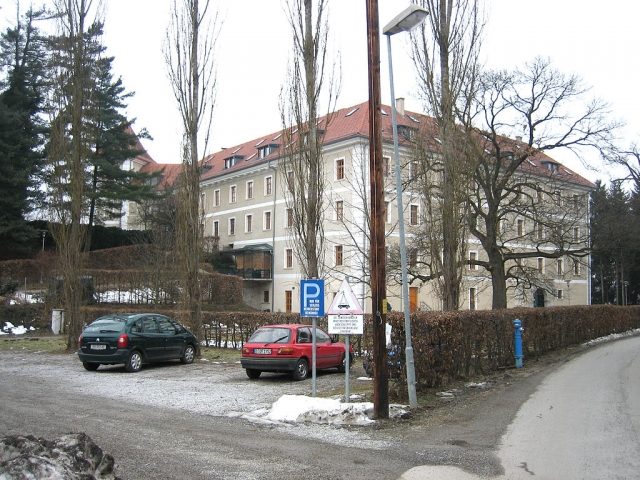
The Herbersdorfer family, as Wildon vassals "de Herwigesdorf", were first mentioned in a document in 1147, and the Herbersdorf Castle has existed since about that time. Near the castle, Markwart von Herbersdorf had a church built for himself and his subjects in 1218; around the castle and church, the village of Allerheiligen bei Herbersdorf gradually developed. The Herbersdorfer family, who also owned a second castle near Stainz, acquired numerous farms and lands in our region and held the Herbersdorf dominion until 1609, when, with the death of the last Herbersdorfer, it passed to the Glojacher family. The Glojacher family had a bad reputation as exploiters of peasants and soon had to sell Herbersdorf to the Jesuits due to high tax debts.
The Jesuits took over the dominion in 1640 and immediately thereafter began extensive renovations, which - with interruptions - continued until the late 18th century and largely gave the castle its current appearance. The Jesuits primarily used Herbersdorf as a summer retreat for the Graz Collegium, but in 1680, due to the plague raging in Graz, the instruction of the scholastics of the University of Graz - then also under Jesuit leadership - was moved here. With Jesuit support, the church of the small village was also unusually splendidly expanded. In 1773, the Jesuit era came to an end, the order was dissolved, and the Herbersdorf dominion fell to the state religious fund. For the subjects, this period brought radical changes and great uncertainty, but also great relief, as the state at that time tried to standardize, and later even abolish, the completely outdated and unjust system of feudal lordship and to create a secure existence for farmers free from arbitrary rule.
In 1812, the South Tyrolean freedom hero Martin Teimer, from Schlanders, who distinguished himself in the fight against the Napoleonic occupation, bought the castle and dominion of Allerheiligen and lived here with his family until his death in 1838. From then on, the dominion changed hands eight times until it was taken over in 1932 by Herta and Friedrich Nitsche, Edle von Hohenplan, who held it during the difficult times of the recession and World War II. During the war years, ethnic German refugees and the "Volksdeutsche Mittlungsstelle" (Ethnic German Mediation Office) were quartered there. The Nitsche family only occupied the first floor; a Ukrainian SS division also briefly took up quarters here; finally, even after the end of the war, Herbersdorf was not spared from looting and theft by occupiers and even parts of the village population.
The social and political changes and the shortage of labor made the estate increasingly unprofitable. In 1958, Dr. Nitsche largely gave up the agricultural business and concentrated on fruit growing, but even this was more or less operated as a sideline, and the castle could not be maintained as a result. In 1988, Herbersdorf was sold to the building contractor Leitner and converted into rental apartments.
Take Mobile History with you
You are reading this text for free. Premium adds what matters on the road: descriptions read aloud, sites found through your camera, whole regions taken offline.
- Every description, including the ~17,700 Premium sites
- Audio guide: have descriptions read to you on location
- AR finder: see sites through your camera, with distance and bearing
- Unlimited saved sites
14 days free, then from €2.99 a month. Cancel anytime.
Source: Wikipedia · Licence: CC BY-SA 4.0 · Image: http://commons.wikimedia.org/wiki/File:Allerheiligen_Schloss_Herbersdorf_IMG_4441.jpg?uselang=de
This description draws on the facts documented in the linked Wikipedia article; Wikipedia content is licensed under CC BY-SA 4.0. Wording and editing: Mobile History.
Location: 46.9148, 15.5491