Germany-Central Forever Living Products
CastleMunich (München)
Freiham Castle
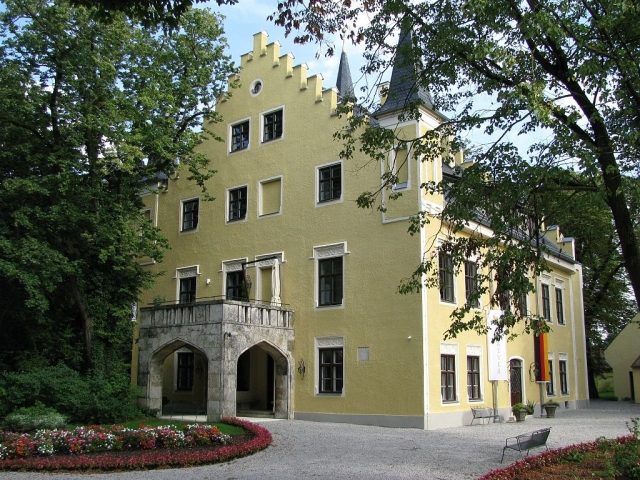
Freiham Estate is a medieval manor house in the south of the Munich district of Aubing. The neighboring new development area Freiham is named after this manor house. The estate is a protected building ensemble. Some of the buildings are also protected as individual architectural monuments.
Freiham Estate is located in the west of Munich, in the south of the Aubing district, on the border with the neighboring municipality of Gräfelfing. Freihamer Allee runs through the estate in an approximate north-south direction. To the east of the estate lies the new development area Freiham, and to the north runs the Munich-Herrsching S-Bahn line. The station located there has been disused since 1975. To the west and south, the estate is surrounded by motorways, the Munich motorway ring (A99) to the west and the A96 to Lindau to the south. The Freiham-Mitte junction leads to the A99, and the Freiham-Süd junction to the A96.
First Mention and Changing Owners (1136 - 1785)
The first known mention of "villa Frihaim" dates back to 1136, when Pope Innocent II confirmed various possessions to Polling Monastery in a diploma. The noble seat was also mentioned in documents around 1184-1186 as Frihaim (free home). With the mention of an Eberdardus de Friham as a witness, a document from 1190 provides further evidence for the noble seat of Freiham. In 1261, an Arnoldus de Friham was mentioned. Arnoldus "miles de buchheim" confirms that his Freiham property is a fief of the church of Beuerberg.
Since the late Middle Ages, the estate belonged to various Munich patrician families, from 1420 to the Barth and Pütrich, from 1554 (or 1520) to the Ligsalz. The estate had the status of a Hofmark, where the lords of the manor also exercised lower jurisdiction over their subjects.
After the Thirty Years' War, Freiham Estate came into the possession of Elector Ferdinand Maria of Bavaria, who first leased it to Baron Anton von Berchem and in 1676 to his chamber musician Achilles von Hermannsreuth (who is buried in the church of Freiham). In 1679, Hermannsreuth elevated Freiham to a noble seat and in 1680 built the castle, which still stands today, in its original form. Von Hermannsreuth had only one descendant. His daughter Adelheid-Franziska entered the Ridler Monastery in Munich, which thereby came into possession of Freiham. In 1760, the monastery sold the estate to Minister Kreittmayr, who in 1780 resold it to Court Chamber Councillor Anton von Spitzel.
Main Seat of the Counts of Yrsch (1785 - 1887)
In 1785, Johann Nepomuk von Yrsch (1736–1811) bought "a farmstead with a castle building and an inn" initially for the Bavarian state to be used as a sheep breeding station for the Schleißheim domain. After disputes arose over the purchase price, Baron von Yrsch acquired the property for 25,000 guilders for himself in the same year. In 1792, Johann Nepomuk was elevated to the rank of Imperial Count. Johann Nepomuk's second son, Friedrich Graf von Yrsch (1767–1844), inherited the property and expanded the estate there to around 800 hectares. He was one of the co-founders of the agricultural association in Bavaria. Four generations of the von Yrschs remained on the estate until 1887; they were also granted lower jurisdiction. Under them, large parts of the former pastureland were converted to arable farming. The farm buildings of the estate were also adapted accordingly. In 1818, Freiham became part of the newly established municipality of Aubing, but the former Hofmark remained a patrimonial court under the leadership of the von Yrsch family until 1848.
In 1818, a fire occurred on the estate, which was subsequently rebuilt and declared a family fideicommiss (indivisible, unsaleable family property). After the death of the childless Friedrich, the estate passed to his older brother Carl Theodor Graf von Yrsch (1766–1854). His namesake grandson Carl Theodor Graf von Yrsch (1832–1899) had the castle building rebuilt in Neo-Gothic style in 1865/66, giving it its present appearance. In the mid-19th century, a connection to the Pasing-Herrsching railway line was added.
From the Maffeis to the Present (from 1887)
In 1887, Carl Theodor sold the estate for a purchase price of 460,000 Reichsmark to Imperial Councillor Hugo von Maffei (1836 - 1921). The von Maffeis began cultivating fodder and potatoes on former pasture and fallow land. In 1887, a distillery equipped with the latest technology was built for the production of potato schnapps.
Shortly after 1900, Hugo von Maffei sold part of the lands located to the east of the estate so that the Neuaubing repair workshop could be built there. Hugo's son Rudolf further expanded the main estate, agriculture, and out-estates (Moosschwaige in the northwest and Streiflach in the southwest). In 1924, he had the interior of the castle representatively renovated.
In 1942, Aubing, including Freiham and Moosschwaige, but without Streiflach, was incorporated into Munich. In 1966, part of the lands east of the manor house was sold to the City of Munich for the construction of a new housing estate, but construction of the Freiham settlement only began there in 2006.
In 2008, the entire historic complex initially went to two real estate companies. The castle building was further sold to the US company Forever Living Products. Rex Maughan, the founder of Forever Living Products, had the castle extensively and stylishly renovated in 2009/10 to use it as the German headquarters for the company. Approximately 40 employees are housed in the building.
Ensemble+
The estate consists of several elongated buildings with gabled roofs, forming roughly a rectangle perpendicular to Freihamer Allee. Among the buildings are the Schlosswirtschaft (castle inn) with a beer garden, former stables and barns, a disused potato schnapps factory, and other outbuildings. Within the building rectangle stands the former Hofmark church Heilig Kreuz. Freiham Castle is located somewhat apart from the estate, about 100 m further south in a park. Remnants of the once magnificent chestnut avenues leading to the estate are still present and are under nature protection. Individually protected as architectural monuments are the castle, the Heilig Kreuz church, the Schlosswirtschaft, as well as a former cow stable and a former horse stable.
Individual Buildings+
Castle
Freiham Castle is located at Freihamer Allee 31. It is a two-story building with a high gabled roof. The north and south facades have stepped gables, and the north facade also has corner turrets. An octagonal stair tower stands at the southeast corner. In front of the entrance on the north side is an antechamber with a balcony. The garden facade on the east side of the house is three-story and has a central risalit with a stepped gable. The architectural monument also includes the park surrounding the castle, which is partly enclosed by a fence and partly by a garden wall. The addition of the garden side, the central risalit, the stepped gables, and the turrets date from the 1865/66 renovation in Neo-Gothic style.
Heilig Kreuz
The Heilig Kreuz church is located at Freihamer Allee 24. It lies in the southwest of the estate in a small cemetery, which is surrounded on three sides by buildings of the manor house and features gravestones from the 17th to 20th centuries. A Heilig Kreuz church was first mentioned in a document in 1315. The current late Gothic single-nave building with a west tower probably dates from the mid-15th century. The original interior decoration is not preserved. A first renovation took place in 1620 in the early Baroque style and gave the nave its current appearance with round-arched windows and barrel vaulting with lunettes. The high altar, side altars, and pulpit date from the second renovation in 1781 in the late Rococo style. The apostle figures on consoles on the south wall also date from the late 18th century. The date 1781 is noted in the chancel arch.
Schlosswirtschaft
The Schlosswirtschaft Freiham inn is located at Freihamer Allee 21/23 in the southeast of the estate, opposite the Heilig Kreuz church. It is a two-story building with a gabled roof. The entrance on the south side is formed by a portal from the 17th/18th century, which was heavily altered in the 19th century. This suggests a Baroque origin. Also to the south, there is a beer garden in front of the Schlosswirtschaft.
Cow Stable
The former cow stable is located without its own house number at a right angle next to the Schlosswirtschaft, thus forming the east side of the manor house. The building is a single-story structure with a gabled roof. It probably dates from the end of the 19th century. After a fire in 1913, it was rebuilt. Inside, the building is a three-aisled, elongated hall with Bohemian caps over round pillars.
Horse Stable
The former horse stable is located at Freihamer Allee 22 next to the Heilig Kreuz church within the building rectangle of the manor house. It forms the northern boundary of the cemetery surrounding the church. The building is a single-story structure with a high gabled roof. It probably dates from the 18th century. Inside, the building is a three-aisled hall vaulted on pillars, with the Bohemian caps bearing simple stucco decoration.
Take Mobile History with you
You are reading this text for free. Premium adds what matters on the road: descriptions read aloud, sites found through your camera, whole regions taken offline.
- Every description, including the ~17,700 Premium sites
- Audio guide: have descriptions read to you on location
- AR finder: see sites through your camera, with distance and bearing
- Unlimited saved sites
14 days free, then from €2.99 a month. Cancel anytime.
Source: Wikipedia · Licence: CC BY-SA 4.0
This description draws on the facts documented in the linked Wikipedia article; Wikipedia content is licensed under CC BY-SA 4.0. Wording and editing: Mobile History.
Location: 48.1362, 11.4033