Nursing home
CastleBrachelen
Berg Castle (Brachelen)
The Historic Building: A Journey Through Time+
From Monastery to Modern Care Facility+
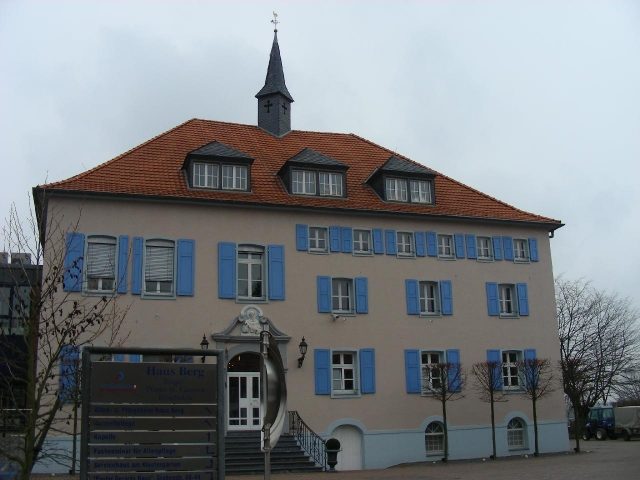
The main building dates back to the 18th century. In 1865, the building housed a monastery; in 1884, a chapel was built for it. After enormous war damage, the house was rebuilt and today serves as a nursing home.
Architectural Features and Historical Significance
The original structure, typical of 18th-century architecture, has undergone several transformations. The chapel, added in the late 19th century, showcases neo-Gothic elements, reflecting the architectural trends of its time. Despite the extensive damage during the war, efforts were made to preserve as much of the original character as possible during reconstruction.
The Monastery Period (1865-1945)+
For nearly a century, the building served as a spiritual retreat. The monastic community played an important role in the local area, providing education and care for the needy. The chapel, consecrated in 1884, became the heart of the monastery, where daily services and prayers were held.
Daily Life in the Monastery
Life in the monastery was characterized by strict routines, prayer, and work. The monks cultivated gardens, studied ancient texts, and engaged in charitable activities. The serene atmosphere of the building, with its thick walls and quiet courtyards, provided an ideal environment for contemplation and spiritual growth.
War and Reconstruction (1945-1955)+
The Second World War brought immense destruction to the region, and the historic building did not escape unscathed. Large parts of the structure were severely damaged, and the future of the building was uncertain. However, thanks to the dedication of local residents and various organizations, reconstruction efforts began shortly after the war ended.
Challenges and Triumphs of Reconstruction
Rebuilding the damaged structure was a monumental task. Shortages of materials and skilled labor posed significant challenges. Nevertheless, with perseverance and ingenuity, the building was gradually restored to its former glory. The reconstruction not only preserved a historic landmark but also symbolized the resilience and hope of the community.
The Modern Era: A Care Home (1955-Today)+
After its reconstruction, the building was repurposed to meet the evolving needs of society. It was transformed into a modern care home, providing comfort and support to the elderly and those in need of long-term care. This new chapter marked a continuation of the building's legacy of service and community welfare.
A Place of Comfort and Community
Today, the historic building stands as a testament to its rich past and its vibrant present. It offers a warm and welcoming environment for its residents, combining historical charm with modern amenities. The former monastery, once a place of spiritual devotion, now serves as a haven of care, continuing its tradition of contributing positively to society.
Take Mobile History with you
You are reading this text for free. Premium adds what matters on the road: descriptions read aloud, sites found through your camera, whole regions taken offline.
- Every description, including the ~17,700 Premium sites
- Audio guide: have descriptions read to you on location
- AR finder: see sites through your camera, with distance and bearing
- Unlimited saved sites
14 days free, then from €2.99 a month. Cancel anytime.
Source: Wikipedia · Licence: CC BY-SA 4.0
This description draws on the facts documented in the linked Wikipedia article; Wikipedia content is licensed under CC BY-SA 4.0. Wording and editing: Mobile History.
Location: 51.0059, 6.2432