To be privately owned
ManorLorch
Hilchenhaus Manor (Lorch)
The Historic Building: A Journey Through Time+
From Medieval Origins to Renaissance Splendor+
The history of this impressive building dates back to the Middle Ages. Originally, a medieval castle stood on this site, serving as a strategic stronghold. Over the centuries, it underwent numerous transformations, reflecting the changing architectural styles and the needs of its inhabitants.
The Renaissance Palace: A Masterpiece of Architecture+
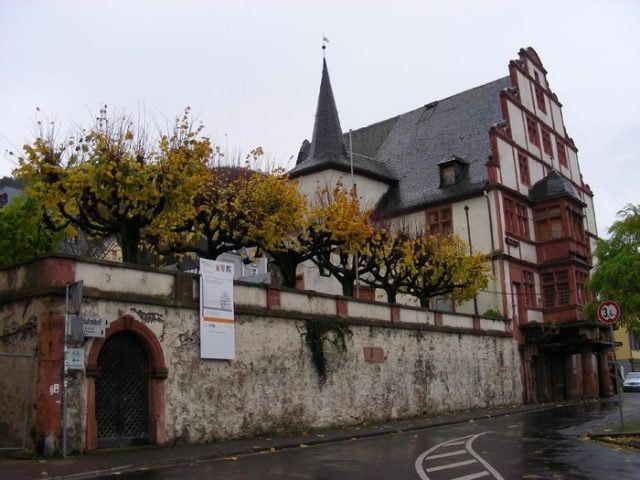
The most significant transformation occurred in the 16th century, when the medieval castle was replaced by a magnificent Renaissance palace. The knight's seat was built between 1546 and 1573 by the Lords of Hilchen.
This period marked a golden age for the building, as it was transformed into a lavish residence, showcasing the wealth and power of its owners. The palace's design incorporated elements of Italian Renaissance architecture, characterized by its symmetry, classical proportions, and ornate decorations.
Architectural Features:
- Façade: The façade is adorned with intricate stone carvings, depicting mythological scenes and heraldic symbols.
- Courtyard: The inner courtyard features a beautiful arcaded gallery, providing a serene space for contemplation.
- Great Hall: The Great Hall, with its high ceilings and large windows, was used for banquets and grand receptions.
- Chapel: A private chapel, decorated with frescoes and stained glass windows, served as a place of worship for the family.
Later Centuries: Adaptations and Renovations+
In the following centuries, the building underwent further adaptations and renovations. While some changes were made to modernize the interior, great care was taken to preserve its historical character. During the Baroque period, some rooms were redecorated with opulent stucco work and frescoes.
In the 19th century, the palace was acquired by a wealthy industrialist, who undertook extensive restoration work, bringing it back to its former glory. He also added a picturesque English garden, complementing the palace's grandeur.
The Building Today: A Cultural Monument+
Today, the historic building stands as a testament to centuries of architectural evolution and cultural heritage. It serves as a museum, open to the public, offering a fascinating glimpse into the lives of its former inhabitants and the rich history of the region.
Visitors can explore the various rooms, admire the exquisite artwork and furniture, and learn about the building's past through interactive exhibits and guided tours. The palace also hosts cultural events, concerts, and exhibitions, making it a vibrant center of art and history.
Take Mobile History with you
You are reading this text for free. Premium adds what matters on the road: descriptions read aloud, sites found through your camera, whole regions taken offline.
- Every description, including the ~17,700 Premium sites
- Audio guide: have descriptions read to you on location
- AR finder: see sites through your camera, with distance and bearing
- Unlimited saved sites
14 days free, then from €2.99 a month. Cancel anytime.
Source: Wikipedia · Licence: CC BY-SA 4.0
This description draws on the facts documented in the linked Wikipedia article; Wikipedia content is licensed under CC BY-SA 4.0. Wording and editing: Mobile History.
Location: 50.0432, 7.8046