To be privately owned
ManorBerlin-Blankenfelde
Blankenfelde Manor
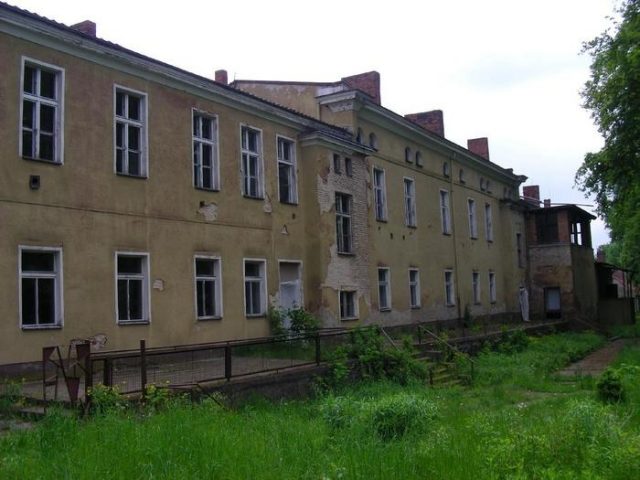
The history of the estate is closely linked to the village of Blankenfelde. Like many places in the Margraviate of Brandenburg, Blankenfelde is first mentioned in 1375 in the Landbuch of Emperor Charles IV. The village was probably founded in the first half of the 13th century as part of Brandenburg's expansion into the Barnim region.
- 1519 First documented mention as a knight's estate with a residential courtyard and sheep farm, owned by the von Barfuß family of Malchow.
- 1618 – 1648 During the Thirty Years' War, the village and estate are severely damaged, and ownership changes several times.
- 1679 E.J. von Grumbkow, minister and chief court marshal to the Great Elector, becomes owner of the estate. He rebuilds the estate and village. The estate increasingly assumes a dominant economic position in the village. Grumbkow acquires brewing and distilling rights and establishes a brewery on the estate.
- 1711 King Frederick I of Prussia takes over the estate. A royal pleasure house and pleasure garden are created. The estate becomes a sovereign "Domäne Estate" of the Niederschönhausen office.
- 1776 Great fire in Blankenfelde. The village and presumably also the estate are largely destroyed.
- 1811 The Berlin citizen J.H. Neumann acquires the estate and operates a horse breeding farm.
- around 1850 The manor house (today called "Kurhaus") is built in its present external form. The building serves as the seat of the lord of the manor. The estate manager's house (today called "Gutshaus") is built, with the horse stable located in the east wing.
- 1880 The garden house is built. Later it is used as a wheelwright's workshop. Today it is used by the Freie Naturschule. Most of the stable and barn buildings are also likely to have been built around this time.
- 1882 The city of Berlin buys the estate to operate sewage irrigation fields. The estate becomes a "City Estate".
- 1890 The manor house is converted into a "home" – for people with lung diseases and women in childbirth.
- 1897 – 1908 As part of the home's operation, a reclining hall is built on the terrace of the home and another reclining hall in the spa park.
- approximately until 1914 The Blankenfelde City Estate is considered an excursion and recreation destination. Many postcards date from this period.
- around 1920 The use as a "home" is abandoned – the smell from the sewage fields is not appreciated by those in need of recovery. The Kurhaus is used as a "light hospital".
- 1928 For the new road leading to Berlin (today B 96a), the estate park is divided crosswise. As compensation for the parts of the garden located west of the road, the estate grounds are extended by the tip south of the ditch. Municipal facilities (fire station, daycare center, and school) gradually emerge in the area west of the road.
- around 1933 The Kurhaus is used as an old people's home.
- 1939 to 1945 During World War II, refugees are quartered.
- 1945 The Red Army occupies Blankenfelde and uses the estate buildings for its administration. Refugees are accommodated in the Kurhaus.
- 1949 The City Estate becomes a "People's Own Estate" – and thus part of the overall system of agricultural collectivization (VEG). The estate primarily engages in milk and meat production, with pigs, cattle, sheep, and horses. Fodder is grown on the arable land.
- around 1950 A single-story extension is built onto the Kurhaus behind the entrance to the estate grounds. This is used as a daycare center.
- around 1950 – 1960 There is a riding arena in the estate park, where tournaments also take place.
- around 1960 The main administration of the People's Own Estates (VEG) is housed in the manor house, as well as an apprentice dormitory.
- 1975 A new building for the daycare center is erected on the site of the riding arena.
- 1985 The sewage fields are decommissioned and poplars are planted.
- 1991 The "Betriebsgesellschaft Stadtgüter Berlin mbH" (City Estates Berlin Operating Company Ltd.) is founded. The City Estate now belongs to the State of Berlin again.
- 1992 The "Betriebsgesellschaft Stadtgüter Berlin mbH" relocates its administrative headquarters to Blankenfelde. The administration offices move into the Kurhaus and the Gutshaus.
- from 1995 The City Estate largely stands empty and falls into disrepair.
- 1996 The City Estate is placed under monument protection. The State of Berlin finds no investor for a use that respects the monument. The City Estate is transferred to the Liegenschaftsfonds Berlin (Berlin Real Estate Fund). Its efforts to sell the estate also remain unsuccessful.
- 2002 The "Natur & Kultur" association in the neighboring village of Lübars (LabSaal Lübars) decides to save the City Estate from decay.
- 2004 The initiative leads to the independent, non-profit association "StadtGut Blankenfelde" with the goal of taking over the ensemble. Intensive negotiations are held with the Liegenschaftsfonds Berlin. The demanded "market value" is far beyond the association's means.
- 2005 Association members finance a contaminated sites report. Conclusion: The costs of contaminated site remediation are higher than the market value. This leads to a breakthrough in negotiations.
- 2006 The association acquires the City Estate for 1€ – and commits to contaminated site remediation. The property is transferred to the ownership of the non-profit "Stiftung trias" foundation – to permanently remove it from land speculation and protect it from fragmentation.
- from 2006 As part of Saturday work, the association reclaims the overgrown grounds. Among other things, a gas station and the asbestos-contaminated daycare building in the estate park are demolished.
- 2008 Over 100 gardeners from BASEG (Federal Association of Self-Administered Horticultural Businesses) work voluntarily for a week on the design of the outdoor facilities. The former northern Zingergraben is re-naturalized, and a publicly accessible play landscape, a sheepfold, a stable area with planting beds and dry stone walls, as well as a barefoot path are created.
- 2009 The association presents itself to the tenant cooperative SelbstBau e.G. as a housing project. A cooperation for the renovation of the Kurhaus and Gutshaus is decided.
- 2011 The renovation of the Kurhaus and Gutshaus begins.
- 2012 Planned move-in of residents.
Take Mobile History with you
You are reading this text for free. Premium adds what matters on the road: descriptions read aloud, sites found through your camera, whole regions taken offline.
- Every description, including the ~17,700 Premium sites
- Audio guide: have descriptions read to you on location
- AR finder: see sites through your camera, with distance and bearing
- Unlimited saved sites
14 days free, then from €2.99 a month. Cancel anytime.
Source: Wikipedia · Licence: CC BY-SA 4.0 · Image: http://www.wehrbauten.de/thread.php?threadid=526
This description draws on the facts documented in the linked Wikipedia article; Wikipedia content is licensed under CC BY-SA 4.0. Wording and editing: Mobile History.
Location: 52.6187, 13.3928