Nursing home
ManorKönigslutter - Beienrode
Beienrode Manor
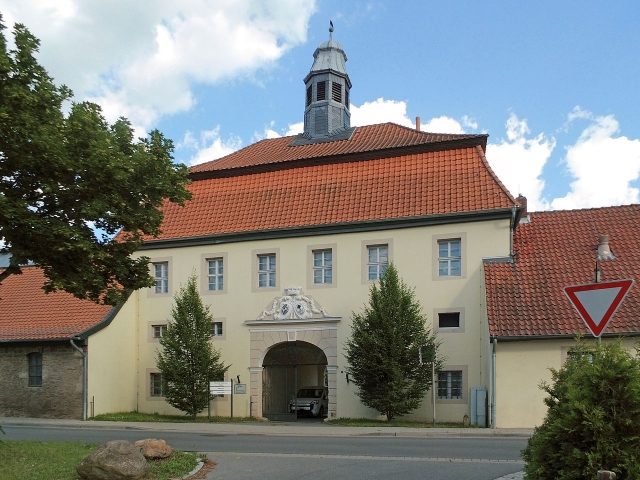
Beienrode, formerly known as "Bodenrod", was a clearing settlement and was first mentioned in a document from 980. Emperor Otto II gifted the estate in the Old Saxon Gau Derlingo to Count Mamecho. Today, however, it cannot be confirmed beyond doubt whether Beienrode near Königslutter or Beienrode near Flechtorf is meant. However, only one place on the Schunter is mentioned, so this could apply to both villages, as both communities are located on the Schunter.
The old part of Beienrode, the so-called Unterdorf (lower village), lies in the Schunter valley and was originally a farming village next to the over 1000-year-old Beienrode manor. The so-called Oberdorf (upper village) was built at the end of the 19th century in connection with potash mining, which was already discontinued in the 1920s.
Through Emperor Lothar of Süpplingenburg, Derlingo with Beienrode came into Welf possession and thus to Henry the Lion. Due to Henry's downfall and the associated division of the duchy, the Hasenwinkel, to which Beienrode belonged, changed hands repeatedly as a borderland between Braunschweig and Lüneburg. It was not until 1428 that the Hasenwinkel finally became Lüneburg territory. From 1814, after the Napoleonic Wars, the Hasenwinkel belonged to the Kingdom of Hanover. Due to the defeat of the Hanoverians, who were allied with the Austrians, the Hasenwinkel came to the Prussians, who had won the Austro-Prussian War. After the Second World War, Beienrode was incorporated into the newly founded Lower Saxony. The most recent change in political affiliation was the territorial reform of 1974. On March 1, 1974, Beienrode and other localities changed from the Gifhorn district to the Helmstedt district. Beienrode was incorporated into the town of Königslutter am Elm.
From 1411
The village of Beienrode was influenced by noble manorial rule for centuries. A free peasantry existed only to a limited extent and very late. From 1411, the Beienrode manor came into the possession of the von Veltheim family, who remained settled there for 400 years. Legacies of the von Veltheims were the chapel from 1433 and the redesign of the original manor, of which only the wall along Steinumer Straße remains. In 1753, the mining captain Georg Gottfried von Bülow bought the estate. Von Bülow had a brandy distillery and a potash factory built. He also straightened the Schunter to operate a raft transport system to transport the produced goods to Braunschweig. From 1763, Beienrode got its own school, which finally existed until 1966, before smaller village schools were largely merged. From 1860 to 1936, the family of the Barons Knigge were the last noble owners of the manor. In 1952, the Refugee Self-Help Organization Beienrode e. V. acquired the estate. Thus, East Prussian pastor's widows and orphans were offered a new home. For decades, the "House of Helping Hands" has been used as a retirement home and conference center. The lands have been leased since 1975.
Take Mobile History with you
You are reading this text for free. Premium adds what matters on the road: descriptions read aloud, sites found through your camera, whole regions taken offline.
- Every description, including the ~17,700 Premium sites
- Audio guide: have descriptions read to you on location
- AR finder: see sites through your camera, with distance and bearing
- Unlimited saved sites
14 days free, then from €2.99 a month. Cancel anytime.
Location: 52.2919, 10.8335