Protestant parish church
MonasteryRheinland-Pfalz
Prämonstratenserinnenstift St. Marienthal
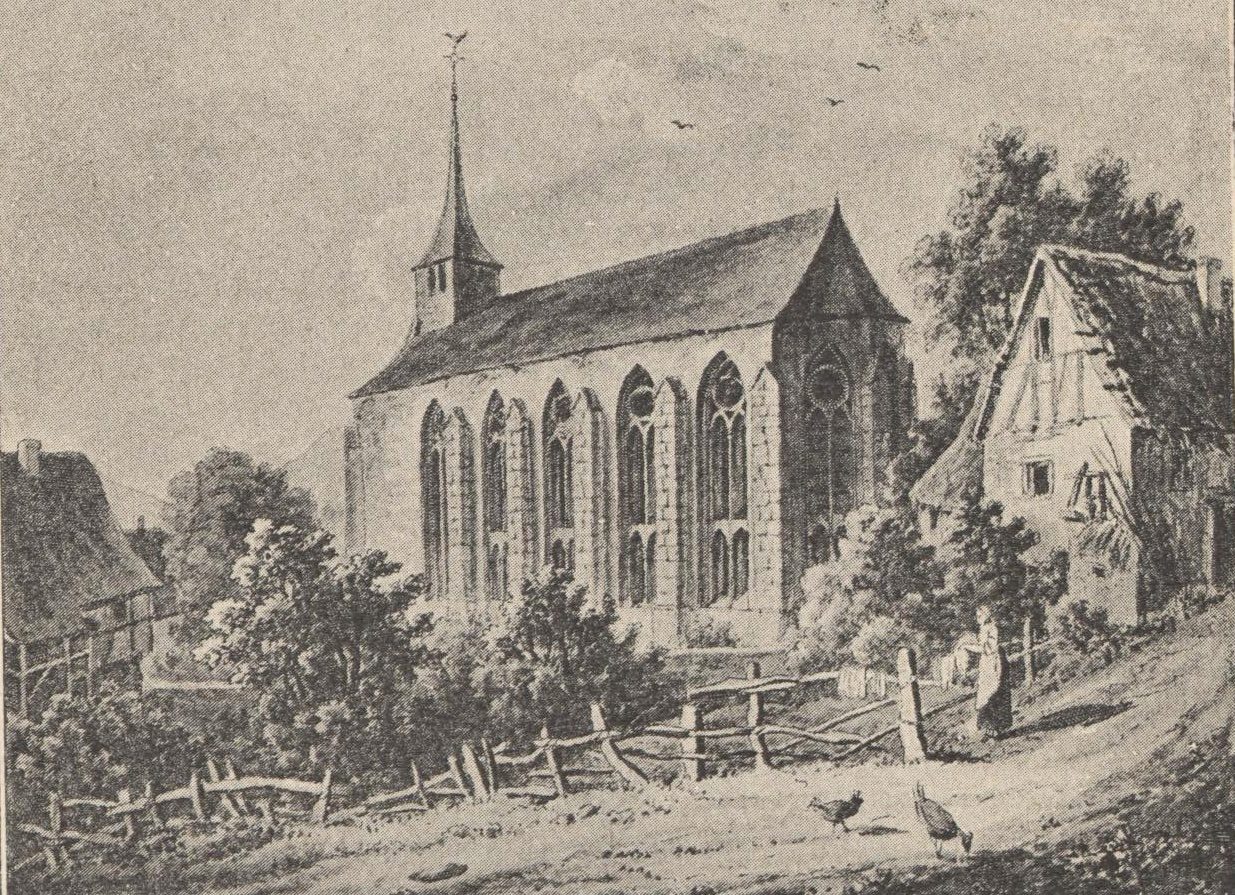
The former Premonstratensian nunnery of St. Marienthal, a dissolved monastery in the Donnersbergkreis in Rhineland-Palatinate, was once a significant religious center. Today, the village's Protestant parish church, with its historical architectural elements, bears witness to the former monastic church.
History+
The founding of Marienthal Monastery on the northern slope of the Donnersberg is closely linked to the settlement of Münsterdreisen Monastery by Premonstratensian canons. Duke Frederick II of Swabia, with the help of his relative Count Ludwig III of Arnstein, converted Münsterdreisen into a Premonstratensian monastery in 1144, populating it with canons from his Arnstein monastery. Count Ludwig III of Arnstein, later venerated as a blessed, first renewed the Münsterdreisen convent and then relocated the Premonstratensian sisters he had founded at Bethlenrode Monastery near Kirdorf to the Palatinate. After a brief stay in Stetten, a monastery was built for them around 1146 in Marienthal, then known as “valle sancte Marie,” which was legally subordinate to Münsterdreisen. Münsterdreisen appointed a provost for the administration of sacraments, celebration of divine services, and management of the convent's external affairs. From Marienthal, the Premonstratensian nunnery of Enkenbach was founded in 1148. A manuscript from around 1150, a copy of Isidore of Seville's Etymologiae, held in the British Library, attests to the existence of a scriptorium and the high level of education among the sisters. In 1523, the last abbot of Münsterdreisen, Johann Bicker, handed over his convent to Lorsch Monastery, which subsequently exercised supervision over Marienthal. During the Peasants' War in 1525, Münsterdreisen was plundered and destroyed; Marienthal apparently remained unharmed. In 1541, the Lorsch provost Jakob Zentner exchanged the Münsterdreisen abbey, including the already defunct Marienthal monastery and its parish church, with the Electoral Palatinate. The Electoral Palatinate took possession of Marienthal Monastery on September 7, 1553, and desecrated it. After disputes, Marienthal was granted as a fief to the Lords of Daun-Falkenstein, who introduced the Reformation there. The exact time of the monastery's dissolution is unknown, but no independent documents exist from Marienthal after 1385, and in 1541, it was referred to as
Take Mobile History with you
You are reading this text for free. Premium adds what matters on the road: descriptions read aloud, sites found through your camera, whole regions taken offline.
- Every description, including the ~17,700 Premium sites
- Audio guide: have descriptions read to you on location
- AR finder: see sites through your camera, with distance and bearing
- Unlimited saved sites
14 days free, then from €2.99 a month. Cancel anytime.
Location: 49.6350, 7.8872