Restaurant
ResidenceBad Kissingen
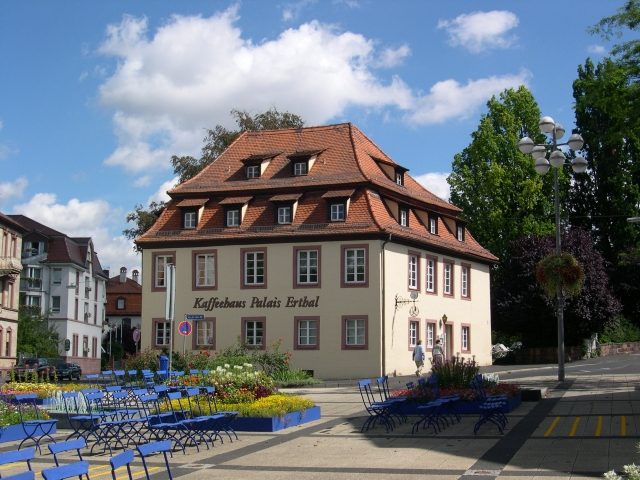
Erthal Palace
The Historic Building: A Journey Through Time+
From Electoral Residence to Modern Landmark+
The historic building, a majestic edifice with a rich past, stands as a silent witness to centuries of history. Originally conceived as a princely residence, it has undergone numerous transformations over time, reflecting the changing eras and their respective architectural styles.
The Beginnings: A Princely Dream
The foundation stone for the building was laid in the 14th century. At that time, it served as the residence of the Prince-Bishops of Würzburg, who shaped the political and cultural landscape of the region from here. The original structure was characterized by its defensive architecture, typical for the late Middle Ages, with thick walls and fortified towers.
Baroque Splendor: An Era of Magnificence
In the 17th century, under the rule of Prince-Bishop Johann Philipp von Schönborn, the building experienced its first major transformation. It was converted into a magnificent Baroque palace, reflecting the splendor and power of the age. Famous architects and artists were commissioned to create a residence that could rival the most famous courts in Europe.
The pleasure palace was built in the 18th century by Count von Erthal.
The 19th Century: Changes and New Uses
With the end of the Holy Roman Empire and the secularization in the early 19th century, the building lost its function as a princely residence. It was subsequently used for various purposes, including as a military hospital and administrative building. These changes also brought architectural modifications, which, however, largely preserved the Baroque character of the building.
The 20th Century to Today: Preservation and Public Access
In the 20th century, the importance of the building as a cultural monument was recognized. Extensive restoration work began to preserve its historical substance and make it accessible to the public. Today, the building houses a museum that vividly presents its history and the lives of its former inhabitants. It is also a popular venue for cultural events and conferences.
Architectural Features and Art Historical Significance+
The building is an outstanding example of Baroque architecture in Southern Germany. Its impressive facade, the richly decorated interiors, and the magnificent gardens bear witness to the artistic mastery of its creators. Particularly noteworthy are the Kaisersaal with its breathtaking ceiling frescoes and the Hofkirche, a jewel of Baroque sacred architecture.
The building's art historical significance extends beyond its architectural beauty. It houses an extensive collection of paintings, sculptures, and handicrafts from various eras, which provide deep insights into the cultural history of the region.
The Building as a Cultural Meeting Place+
Today, the building is more than just a historical monument; it is a vibrant cultural meeting place. It regularly hosts exhibitions, concerts, lectures, and workshops that attract visitors from all over the world. Its unique atmosphere makes it an ideal place for cultural exchange and education.
The commitment to preserving and revitalizing this historic building ensures that its rich history and cultural significance will be preserved for future generations.
Take Mobile History with you
You are reading this text for free. Premium adds what matters on the road: descriptions read aloud, sites found through your camera, whole regions taken offline.
- Every description, including the ~17,700 Premium sites
- Audio guide: have descriptions read to you on location
- AR finder: see sites through your camera, with distance and bearing
- Unlimited saved sites
14 days free, then from €2.99 a month. Cancel anytime.
Source: Wikipedia · Licence: CC BY-SA 4.0
This description draws on the facts documented in the linked Wikipedia article; Wikipedia content is licensed under CC BY-SA 4.0. Wording and editing: Mobile History.
Location: 50.1996, 10.0800