Museum
CastleLinz
Linzer Castle
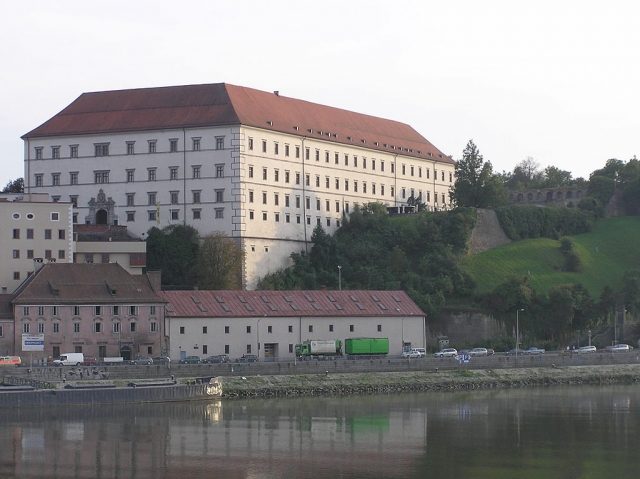
Linz Castle is located on a hill above the old town district of Linz, directly on the Danube.
The castle was built on the site of the former Roman fort Lentia. The first known mention dates from 799. Under Emperor Frederick III, the castle was converted into a palace in 1477 and served as his residence from 1489 to 1493. The Friedrichstor (Frederick's Gate), which still stands today and bears the well-known inscription A.E.I.O.U. on a coat of arms stone, dates from this period. His son, Maximilian I, also stayed in Linz and at the castle frequently.
Emperor Rudolph II had the castle rebuilt and extended in 1600 according to plans by the Dutch master builder Anton Muys. In addition to the mighty four-story block building with two inner courtyards, the main gate to the city (Rudolfstor, 1604) was also built.
During the Bavarian pledge rule from 1620 to 1628, Adam Graf von Herberstorff resided in the castle as governor. Herberstorff strengthened the fortifications around the castle in view of a threatened siege by the peasants. In 1626, the castle was finally besieged by the rebellious peasants.
In 1783, the governor moved with his offices to the Landhaus.
During the Napoleonic Wars, the castle served as a military hospital. The city fire in 1800 originated here. The south wing and part of the transverse wing were destroyed in this fire.
In 1811, the building served as a provincial prison, and from 1851 to 1945 as a barracks for soldiers. Between 1953 and 1963, the building was extended and restored to become the Castle Museum of the Upper Austrian State Museums.
Castle Museum+
The Castle Museum was partially opened in 1963, with the full opening in 1966. It houses historical and ethnographic collections. Permanent exhibitions also include historical weapons, historical musical instruments, and old coins. In addition, special exhibitions are held regularly. Open-air events are occasionally held in the castle courtyard.
In 2006, an architectural competition was held for the reconstruction of the south wing, which burned down in 1800. Of the 109 submitted projects, the one by the Graz architectural firm HoG architektur (Martin Emmerer, Clemens Luser, and Hansjörg Luser) won. The new south wing will be used for an expansion of the Castle Museum. In the summer of 2006, archaeological excavations took place on the future construction site.
The new south wing, realized as a steel-glass construction and costing 24 million euros to build, has housed the castle's collections on the history of technology and natural sciences since July 2009.
Linz Music Theatre+
The planned new Linz Music Theatre was to have been built into the mountain on the Danube side of the castle. The project was rejected by a referendum initiated by the FPÖ.
Take Mobile History with you
You are reading this text for free. Premium adds what matters on the road: descriptions read aloud, sites found through your camera, whole regions taken offline.
- Every description, including the ~17,700 Premium sites
- Audio guide: have descriptions read to you on location
- AR finder: see sites through your camera, with distance and bearing
- Unlimited saved sites
14 days free, then from €2.99 a month. Cancel anytime.
Source: Wikipedia · Licence: CC BY-SA 4.0 · Image: http://commons.wikimedia.org/wiki/File:Linzcastle20050926.jpg
This description draws on the facts documented in the linked Wikipedia article; Wikipedia content is licensed under CC BY-SA 4.0. Wording and editing: Mobile History.
Location: 48.3055, 14.2823