Archaeological monument
MonasteryBielefeld
Kloster Müdehorst
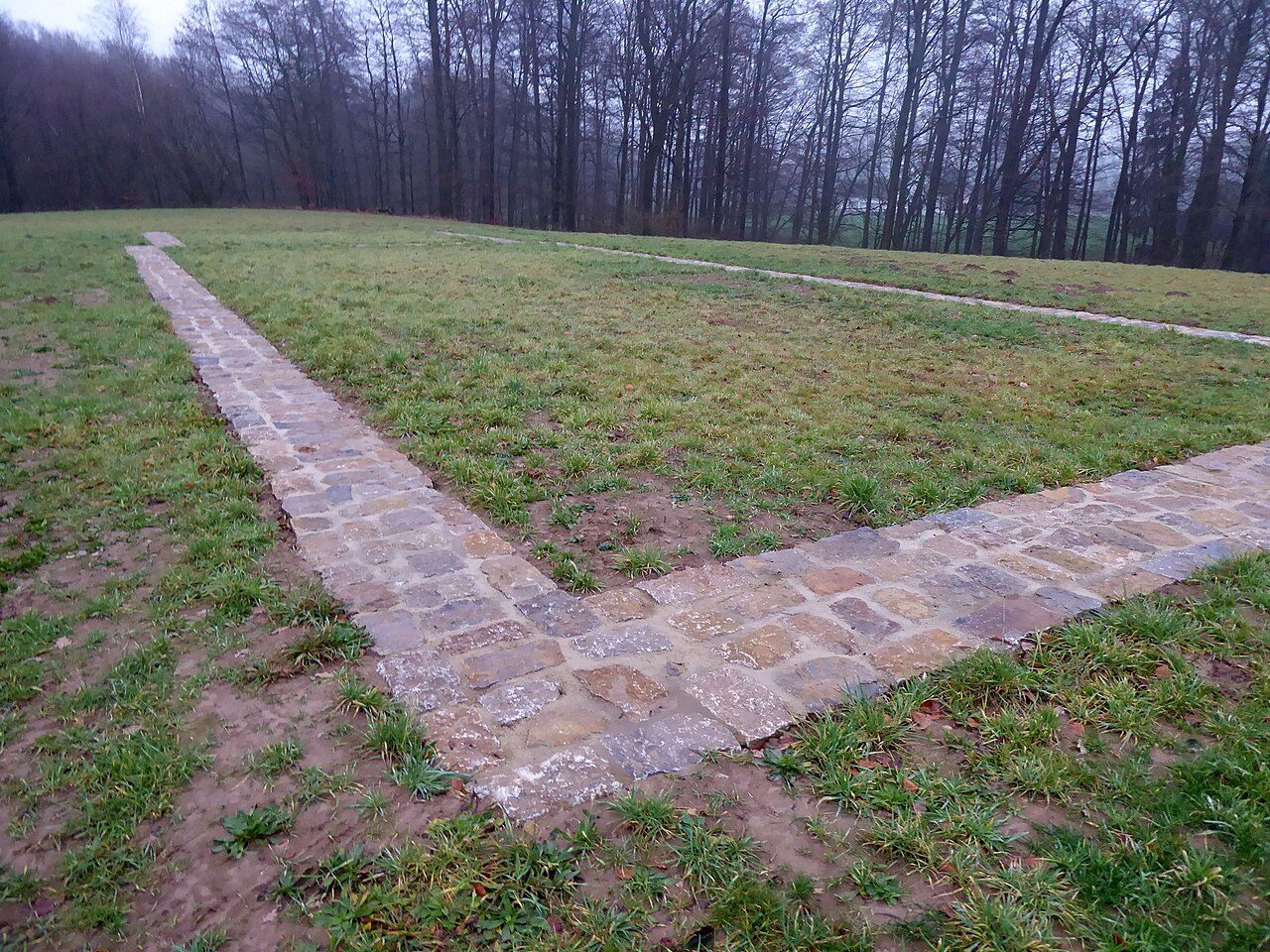
The Müdehorst Monastery, also known as Müdehorst Abbey, is a historic monastic site located in Bielefeld, North Rhine-Westphalia, Germany. It is considered one of the oldest monastic foundations in Westphalia and is currently protected as a cultural monument.
History+
The Müdehorst Monastery was founded around 789 in what is now the Niederdornberg-Deppendorf district of Bielefeld's Dornberg borough. This institution emerged during the Christianization of Saxony, which intensified after Duke Widukind's baptism in 785. Müdehorst is regarded as the first women's abbey or monastery in the Saxon region. The exact details of its founding are difficult to reconstruct due to the absence of royal charters. The noble Waltger, who died around 825, attempted to establish a monastic church in Müdehorst. An extant 12th-century biography, the Vita sancti Waltgeri, recounts his efforts to find a suitable location for a monastic community. Although he laid the foundations, the project was abandoned due to divine instruction. The buildings were never completed, possibly because the site at the confluence of the Schwarzbach and Beckendorfer Mühlenbach streams was too confined. The Müdehorst foundation was abandoned in favor of a new foundation near Alt-Herford, which also failed. Only the later Herford Abbey proved successful. The relocation from Müdehorst is dated to the period between 800 and 823.
Location+
The former Müdehorst Monastery is situated in the city of Bielefeld, in the federal state of North Rhine-Westphalia, Germany. It is located within the Dornberg borough, specifically in the Niederdornberg-Deppendorf district.
On site+
In 1948/49, excavations uncovered remnants of limestone walls, interpreted as parts of the monastic church. These foundation walls, up to one meter wide, were classified as an archaeological monument and subsequently backfilled for protection. Further excavations in 1991/92 confirmed the existence of the foundations and allowed for the determination of the church's size: 32.5 meters in length with a clear width of 10 meters. The stone structure apparently drew inspiration from Irish-Anglo-Saxon models. To permanently preserve the over 1200-year-old archaeological monument, the foundation walls were re-excavated in 2018, backfilled with gravel, and covered at ground level with flagstones to keep the church's footprint visible. The archaeological monument was officially entered into the city of Bielefeld's list of monuments on April 14.
Nearby+
- Woermannscher Adelshof (manor house and estate, approx. 5292 m away)
- Adelshof Meinders (manor house and estate, approx. 5397 m away)
- Adelshof Waldhof (manor house and estate, approx. 5476 m away)
- Adelshof Grestscher Hof (manor house and estate, approx. 5490 m away)
Take Mobile History with you
You are reading this text for free. Premium adds what matters on the road: descriptions read aloud, sites found through your camera, whole regions taken offline.
- Every description, including the ~17,700 Premium sites
- Audio guide: have descriptions read to you on location
- AR finder: see sites through your camera, with distance and bearing
- Unlimited saved sites
14 days free, then from €2.99 a month. Cancel anytime.
Location: 52.0658, 8.5031