German Amber Museum, exhibition on monastery and collegiate history
MonasteryRibnitz-Damgarten
Klarissenkloster Ribnitz
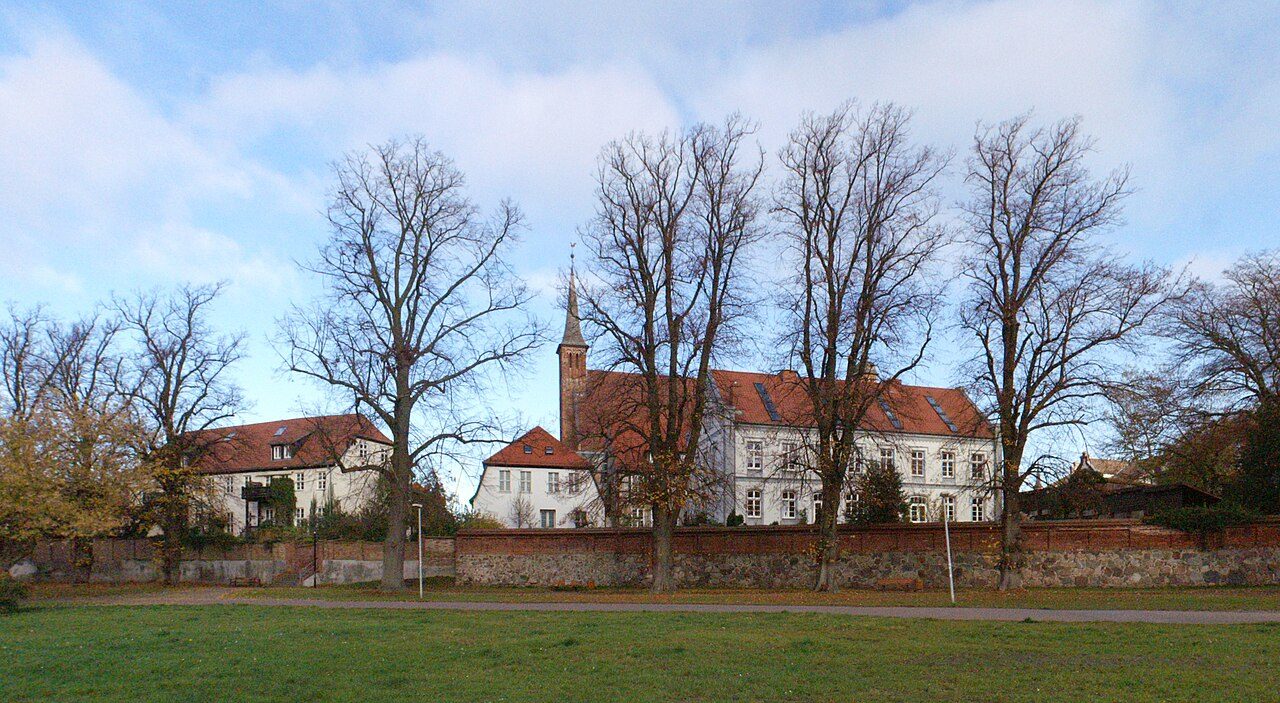
The Klarissenkloster Ribnitz, also known as St. Clare's Monastery, is a historic sacred building located in Vorpommern-Rügen, Mecklenburg-Vorpommern. Originally a monastery of the Poor Clares order, it transformed into an evangelical convent for noblewomen after the Reformation and is now a protected architectural monument.
History+
The monastery's foundation dates back to a donation by Heinrich II of Mecklenburg in 1323/24. Construction began in 1325, and by 1329, the first nuns, including four from the Poor Clares monastery in Weißenfels, had moved in. Heinrich's daughter Beatrix became the first abbess. At times, the monastery housed up to 60 nuns, with their pastoral care provided by Franciscans from Wismar. In 1493, at the instigation of Dukes Magnus II and Balthasar, the Colettine reform was introduced, advocating stricter adherence to the order's rules. Dorothea of Mecklenburg, daughter of Duke Magnus, took over as abbess. Around 1522/23, the Franciscan lector Lambrecht Slagghert compiled a chronicle of the monastery and, together with the nuns, created devotional images. The Catholic monastery continued to exist until the death of the last abbess, Ursula of Mecklenburg, in 1586, long after the Reformation. Following her death, the monastery was converted into an evangelical convent in 1599, offering residence to twelve unmarried daughters from noble families. From 1704 onwards, two places were reserved for daughters of the Rostock council. After the November Revolution, the monastery was initially dissolved in 1920, but previously acquired claims to a place in the convent retained civil law validity. The last canoness and prioress, Olga von Oertzen, passed away in 1961.
Location+
The Klarissenkloster is situated in the town of Ribnitz, which is now part of Ribnitz-Damgarten, within the Vorpommern-Rügen district of Mecklenburg-Vorpommern.
On site+
The former prioress's residence and adjoining canonesses' quarters now house the German Amber Museum. The monastery church, a simple single-nave brick building from the late 14th century, hosts an exhibition on the monastery's and convent's history after extensive renovation. It showcases North German wooden sculptures, findings from the nuns' choir—the so-called 'nuns' dust'—and a collection of Mecklenburg convent orders.
Nearby+
- Gutshaus Petersdorf (manor house, approx. 2214 m away)
- Gutshaus Pütnitz (manor house, approx. 2471 m away)
- Gutshaus Ehmkenhagen (manor house, approx. 4694 m away)
- Gutshaus Plummendorf (manor house, approx. 5199 m away)
Take Mobile History with you
You are reading this text for free. Premium adds what matters on the road: descriptions read aloud, sites found through your camera, whole regions taken offline.
- Every description, including the ~17,700 Premium sites
- Audio guide: have descriptions read to you on location
- AR finder: see sites through your camera, with distance and bearing
- Unlimited saved sites
14 days free, then from €2.99 a month. Cancel anytime.
Location: 54.2411, 12.4322