To be privately owned
ManorFlöha
Flöha Manor
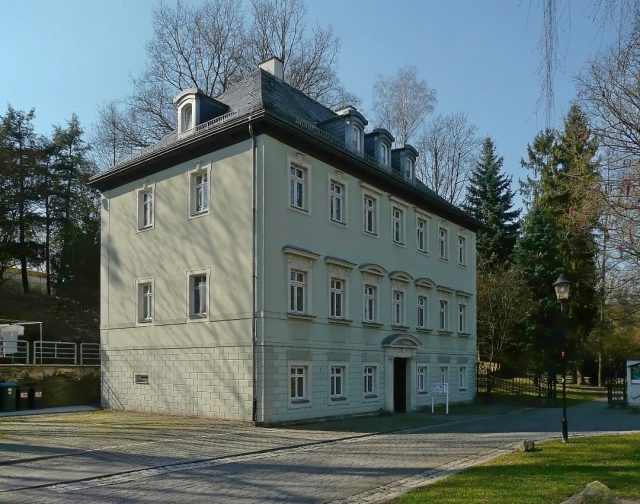
The Historic "Alte Vogtei" in Neunkirchen+
The "Alte Vogtei" (Old Bailiwick) in Neunkirchen, a historic building with a rich past, stands as a testament to centuries of architectural and cultural development. Its origins date back to the Middle Ages, and it has served various purposes throughout its long history.
Architectural History and Construction Phases+
The core of the "Alte Vogtei" dates back to the 14th century, with the oldest parts of the building being constructed around 1350. Originally, it was a fortified tower house, a common type of residence for local nobility and administrators during that period. Over the centuries, the building underwent numerous modifications and expansions.
Medieval Origins (14th-15th Century)
- 1350: Construction of the original tower house, likely by the Lords of Neunkirchen.
- Late 14th Century: Addition of a residential wing to the east.
Renaissance and Baroque Transformations (16th-18th Century)
During the Renaissance, the "Alte Vogtei" was adapted to the changing living standards and defensive requirements. In the 17th century, after the Thirty Years' War, significant reconstruction work took place.
- 1580: Extensive renovation and expansion, including the addition of larger windows and decorative elements.
- 1670: Reconstruction of the roof structure and interior after war damage.
19th and 20th Century Modifications
The 19th century brought further changes, particularly to the facade and interior layout, to meet contemporary needs. In the 20th century, the building was primarily used for administrative purposes.
- 1830: The manor house was built.
- 1905: Modernization of the interior, including the installation of central heating.
- 1970s: Restoration work and adaptation for use as a municipal administration building.
Function and Significance+
The "Alte Vogtei" has played a central role in the history of Neunkirchen. It served as the seat of local lords, later as a bailiwick (Vogtei), and in modern times as a municipal administrative building. Its historical significance lies not only in its age but also in its function as a symbol of local power and jurisdiction.
Current Use and Future+
Today, the "Alte Vogtei" houses parts of the municipal administration and is also used for cultural events and exhibitions. Plans for the future include further restoration work to preserve the building for future generations and to make its history even more accessible to the public.
Take Mobile History with you
You are reading this text for free. Premium adds what matters on the road: descriptions read aloud, sites found through your camera, whole regions taken offline.
- Every description, including the ~17,700 Premium sites
- Audio guide: have descriptions read to you on location
- AR finder: see sites through your camera, with distance and bearing
- Unlimited saved sites
14 days free, then from €2.99 a month. Cancel anytime.
Location: 50.8490, 13.0749