The remains of the Castle can be visited
CastleWeigenheim
Hohenlandsberg Castle
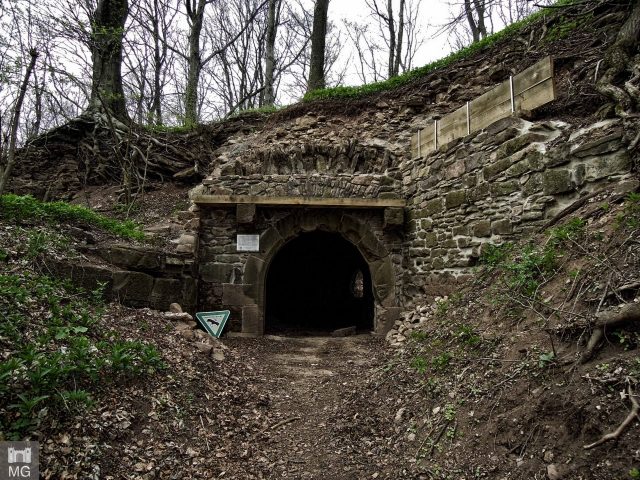
The castle ruin Hohenlandsberg is the ruin of a hilltop castle in the southern Steigerwald on the 498-meter-high Hohenlandsberg near the municipality of Weigenheim in the district of Neustadt an der Aisch-Bad Windsheim in Bavaria.
The castle, presumably founded in the 12th century, was the ancestral seat of the Franconian-Bohemian noble family of the Barons of Hohenlandsberg. In the 13th century, it was held as an imperial fief by the Prince-Bishopric of Würzburg. After several pledges, in 1435, the Prince-Bishopric sold "the castle and office of Lanndßberge" with all appurtenances as a free allodial possession to Erkinger, Lord of Schwarzenberg and Seinsheim, in gratitude for his military support in the bishop's feuds with the cities of Würzburg and Ochsenfurt. Erkinger's descendants owned the castle and the office of Hohenlandsberg as free allodial and undisputed until 1500, thereafter as a fief of the Zollern margraves.
Between 1512 and 1524, Johann von Schwarzenberg had the old castle demolished and rebuilt "anew into the mountain" according to the latest castle construction knowledge.
During the Peasants' War, the cannons for the defense of Schwarzenberg were withdrawn from Landsburg, and the defenseless castle was captured by the peasants on March 4, 1525, and, contrary to their custom, not destroyed. After the outlawing of Friedrich von Schwarzenberg, Margrave Albrecht Alicbiades of Brandenburg-Kulmbach received the castle. The troops of his opponents in the Second Margrave War, the bishops of Würzburg and Bamberg, as well as the imperial cities of Nuremberg and Windsheim, occupied the castle on April 8, 1554, after three days of bombardment; the 396-man garrison had to surrender unconditionally. As soon as Friedrich von Schwarzenberg received news of the castle's surrender, he asked the victors to at least leave him his heavily damaged castle. But they could not be dissuaded from setting fire to the castle on April 12, blowing it up, and "completely razing it to the ground."
What remains today of the increasingly decaying ruin is the deep, wide dry moat with an outer rampart, the wall around the castle courtyard of about 100 meters in diameter, the half-buried vaulted main entrance, and remnants of several vaulted casemates and cellars with collapsing air shafts.
Take Mobile History with you
You are reading this text for free. Premium adds what matters on the road: descriptions read aloud, sites found through your camera, whole regions taken offline.
- Every description, including the ~17,700 Premium sites
- Audio guide: have descriptions read to you on location
- AR finder: see sites through your camera, with distance and bearing
- Unlimited saved sites
14 days free, then from €2.99 a month. Cancel anytime.
Source: Wikipedia · Licence: CC BY-SA 4.0 · Image: Mobile Geschichte
This description draws on the facts documented in the linked Wikipedia article; Wikipedia content is licensed under CC BY-SA 4.0. Wording and editing: Mobile History.
Location: 49.5956, 10.2984