The remains of the castle can be visited
CastleMannheim-Lindenhof
Eichelsheim Castle
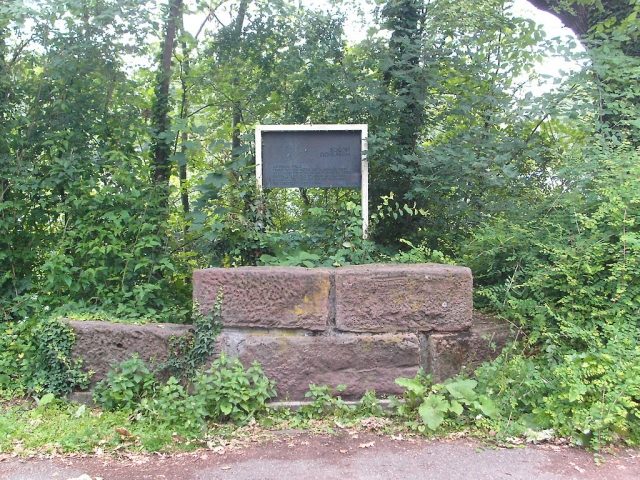
Eichelsheim Castle, also known as Veste Mannheim, served as a toll castle and was located in today's Lindenhof district of Mannheim, near the Stephanienufer on the Rhine.
The Eichelsheim fortification was first mentioned in 1265 as a toll station and was then just a single tower. The name is said to derive from the dense oak forest that once grew there. This location was suitable for subjecting ships on the Rhine to a toll and at the same time keeping the shipping channel clear and clean.
Construction of the actual castle began in 1353. In the following years, the complex was permanently enlarged; it was also the minting site of the famous "Mannheimer Pfennig," a Palatinate silver coin.
From the summer of 1416 to January 1419, the Palatine Elector Ludwig III held the antipope John XXIII captive there on imperial orders. At that time, in addition to the residential and administrative wing with a chapel, the castle had only one solid tower where the pope was imprisoned. During his three years of imprisonment in Mannheim, he wrote poems, among other things, and expressed his pain regarding the transience of all earthly things in poetic records. He later wrote about his time in Eichelsheim:
“My accommodation was cramped, I slept with crooked limbs, my bed was too short, and I had to wear dirty clothes. Nothing good happened to me, but I had to endure mockery and various insults.”
– Cardinal Baldassare Cossa (alias John XXIII) in a letter of complaint, 1419
In 1600, the complex was described with a moat, a fortified gate, and two associated gate towers; in the core area stood a moated castle with four round towers.
During the Thirty Years' War, on September 20, 1622, Tilly's troops, coming from Seckenheim, advanced into two main positions near Mannheim, in front of the Bellenwert on the Neckar and in front of the Eichelsheim toll castle on the Rhine. The fortress commander Sir Horace Veer had the castle set on fire. On September 29, Tilly's soldiers stormed it, extinguished the fire, and repaired the damage. Swedish soldiers captured Eichelsheim in 1632 and blew up the fortress in 1634; 5 years later, it was rebuilt. In 1663, it was recorded that "Eycholsheim is demolished except for the watchtower." During the Palatine War of Succession, the complex was completely destroyed in 1688 during the siege of Mannheim. In 1736, the ruin was fortified again on the occasion of the War of the Polish Succession. In 1765, a flood caused the embankment wall to collapse. Plans from the 19th century still show existing fortress remains.
In 1887, Franz Geyer acquired the former castle grounds and opened the "Restauration Rheinpark" there, later known as "Rheinterrasse Stephanie." Today, only a small wall remnant and a memorial plaque remain at the site.
Take Mobile History with you
You are reading this text for free. Premium adds what matters on the road: descriptions read aloud, sites found through your camera, whole regions taken offline.
- Every description, including the ~17,700 Premium sites
- Audio guide: have descriptions read to you on location
- AR finder: see sites through your camera, with distance and bearing
- Unlimited saved sites
14 days free, then from €2.99 a month. Cancel anytime.
Source: Wikipedia · Licence: CC BY-SA 4.0 · Image: http://de.wikipedia.org/wiki/Datei:Reste_Burg_Eichelsheim.JPG
This description draws on the facts documented in the linked Wikipedia article; Wikipedia content is licensed under CC BY-SA 4.0. Wording and editing: Mobile History.
Location: 49.4739, 8.4641