The Castle can be visited
CastleLeisnig
Mildenstein Castle
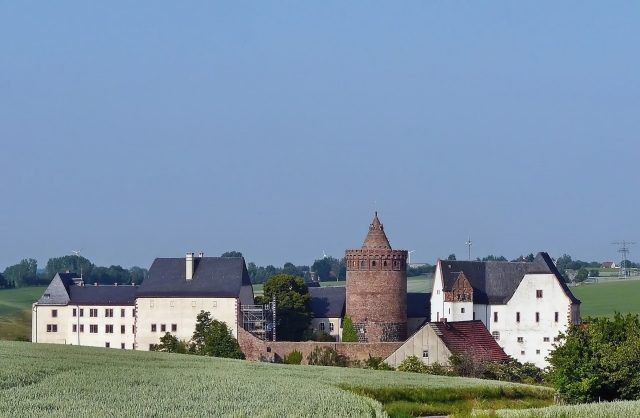
Mildenstein Castle, formerly also known as Mildenstein Palace or Leisnig Castle, is located in Leisnig in the district of Mittelsachsen in the Free State of Saxony. Mildenstein Castle is owned by the Free State of Saxony and is managed by the state enterprise "Staatliche Schlösser, Burgen und Gärten Sachsen" (State Palaces, Castles and Gardens of Saxony).
The spur castle is situated on a spur above the Freiberger Mulde river. In the High Middle Ages, it was always called Leisnig Castle; only since the late 14th century has it been referred to as Mildenstein Castle (after an older castle complex destroyed in 1232).
Even before the construction of the castle, the spur above the Freiberger Mulde was settled in prehistoric times. The castle was built in the 10th century, making it one of the oldest castles in Saxony. It was first mentioned in 1046 as part of the Burgward organization in the German march territory.
In 1084, Emperor Henry IV granted the castle to Wiprecht von Groitzsch, who was established in the old settlement area. The Romanesque castle chapel also dates from around 1100. In 1188, Emperor Frederick Barbarossa issued a document in Leisnig. 30 years earlier, he had renewed the castle and its appurtenances as imperial property. The oldest structural evidence, besides the chapel rebuilt in the 3rd quarter of the 12th century and around 1400, includes the keep in the inner courtyard (last third of the 12th century), the keep in the outer bailey (1st half of the 13th century), and other structural remains (the current gate late 12th/early 13th century).
In the late 14th century, the castle was fundamentally rebuilt under Margrave Wilhelm I for representative purposes – a granary, manor house, and page house were built – but it was never used as a residence and remained as a Wettin administrative seat (Leisnig Office) in relative insignificance.
In 1706/07, the Polish anti-king to August the Strong, Stanisław Leszczyński, chose Mildenstein Castle as his residence. In the 18th and 19th centuries, the castle housed the district court, prison, and official residences. From 1798, the Mirus family created a romantic park around the castle hill, the most significant part of which is the high-quality ruin architecture with a rock tunnel from 1866.
In 1890, the castle began its use as a museum by the Leisnig History and Antiquities Association. The castle museum houses the Döbeln Giant Boot, which, with a height of 3.70 m, was the largest riding boot in the world until 1996. On the occasion of the 950th anniversary of the city of Leisnig, two Leisnig shoemakers made a 4.90 m high giant boot, which surpassed the previously largest specimen.
In 1990, the local animal park located on the castle grounds was closed.
Take Mobile History with you
You are reading this text for free. Premium adds what matters on the road: descriptions read aloud, sites found through your camera, whole regions taken offline.
- Every description, including the ~17,700 Premium sites
- Audio guide: have descriptions read to you on location
- AR finder: see sites through your camera, with distance and bearing
- Unlimited saved sites
14 days free, then from €2.99 a month. Cancel anytime.
Source: Wikipedia · Licence: CC BY-SA 4.0 · Image: Thomas Eichler
This description draws on the facts documented in the linked Wikipedia article; Wikipedia content is licensed under CC BY-SA 4.0. Wording and editing: Mobile History.
Location: 51.1639, 12.9245