The remains of the ancient town can be visited
Ancient BuildingGüneyköy
Ancient City Antiochia am Kragos
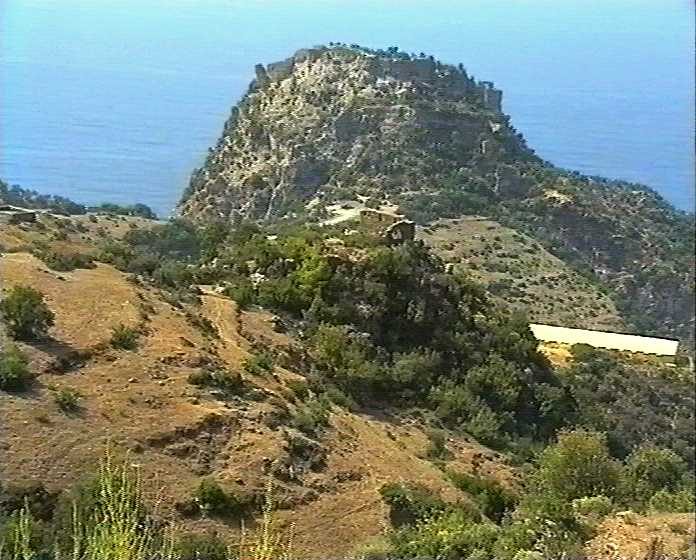
Antiochia ad Cragum (Greek: Αντιόχεια του Κράγου) also known as Antiochetta or Latin: Antiochia Parva (meaning "Little Antiochia") is an ancient Hellenistic city on Cragus (or Cragos or Kragos) mountain overlooking the Mediterranean coast, in the region of Cilicia Trachea, in Anatolia (the site is now located at Güney, Antalya Province, Turkey). Some scholars claim an identity of Antiochia ad Cragum with the city Cragus (Kragos) or, although it lies more than 100 km away, with Sidyma, which some scholars assert was the Lycian Cragus (Kragos).
The city was founded by Antiochus IV Epiphanes in approximately 170 BC. It minted coins from the mid-1st century to the mid-2nd century; the last known of which were issued under Roman Emperor Valerian. The city became part of the kingdom of Lesser Armenia in the 12th century. In 1332, the Knights Hospitallers took the city, after which it was known variously as Antiochetta, Antiocheta, Antiocheta in Rufine (Papal bull of Pope John XXII), and Antiochia Parva.
In Byzantine times, Antiochia Parva was the seat of a bishop. The names of five of its bishops are known. Antonius took part in the First Council of Nicaea in 325, Theodosius in the First Council of Constantinople in 381, Acacius in the Council of Chalcedon in 451, Zacharias in the Trullan Council of 692, and Theophanes in the Council held in Constantinople in 879–880. Since it is no longer a residential bishopric, it is today listed by the Catholic Church as a titular see.
Ruins of the city remain, and include fortifications, baths, chapels, Roman necropolis, and the largest Roman mosaic found in Turkey.
Bishopric+
Antioch minor, identified with the ruins near Günei in present-day Turkey, is an ancient episcopal see of the Roman province of Isauria in the civil Diocese of the Orient. It was part of the Patriarchate of Antioch and was suffragan of the Archbishopric of Seleucia.
The Roman Catholic Diocese of Antioch minor (Latin: Dioecesis Antiochian Parva) is a suppressed and titular head of the Roman Catholic Church.
There are five known Ancient bishops of this diocese:
- Antonio attended the Council of Nicaea in 325;
- Theodosius was present at the first Council of Constantinople in 381;
- Acacius was among the fathers of the Council of Chalcedon in 451;
- Zacharias took part at the Council in Trullo in 692; and
- Theophanes finally witnessed the Council of 879 that rehabilitated the Patriarch Photius of Constantinople.
Today Antioch Less survives as the seat holder; the seat is vacant since April 11, 1964.
- Jacques-Eugène Louis Ménager (June 23, 1955-December 7, 1961)
- André-Jean-Marie Charles de la Brousse (January 26, 1962-April 11, 1964)
Take Mobile History with you
You are reading this text for free. Premium adds what matters on the road: descriptions read aloud, sites found through your camera, whole regions taken offline.
- Every description, including the ~17,700 Premium sites
- Audio guide: have descriptions read to you on location
- AR finder: see sites through your camera, with distance and bearing
- Unlimited saved sites
14 days free, then from €2.99 a month. Cancel anytime.
Source: Wikipedia · Licence: CC BY-SA 4.0 · Image: Klaus-Peter Simon / CC BY 3.0 via Wikimedia Commons
This description draws on the facts documented in the linked Wikipedia article; Wikipedia content is licensed under CC BY-SA 4.0. Wording and editing: Mobile History.
Location: 36.1566, 32.4150