To be privately owned
CastleOberlangenstadt
Old Castle Oberlangenstadt
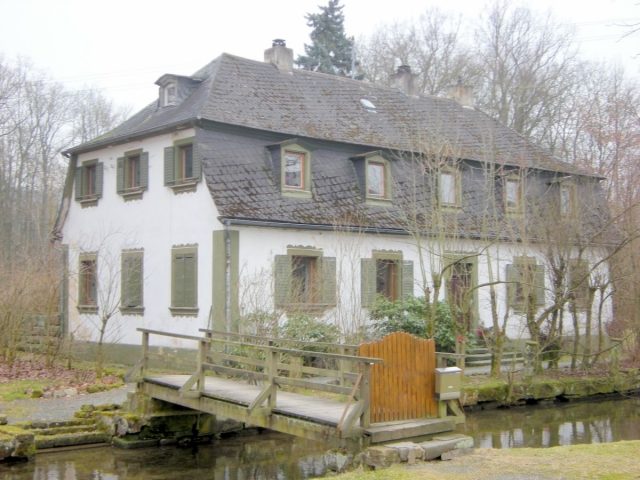
The Historic Building: A Journey Through Time+
From Medieval Origins to Baroque Splendor+
The history of the building, often referred to as "Schloss Künsberg", dates back to the the 12th century. Originally, a medieval moated castle stood on this site, serving as a strategic stronghold for local nobility. Over the centuries, it underwent numerous transformations, reflecting the changing architectural styles and the varying fortunes of its owners.
The Künsberg Era: Reconstruction and Renovation+
A significant turning point in the building's history was the acquisition by the influential Künsberg family. Under their patronage, the castle was extensively rebuilt and renovated. The medieval fortifications gave way to a more comfortable and representative residential palace, incorporating elements of Renaissance and early Baroque architecture.
Architectural Features of the Künsberg Castle
- Main Building: The core of the complex, featuring a stately facade and an impressive entrance portal.
- Courtyard: A spacious inner courtyard, once used for various courtly activities and celebrations.
- Chapel: A private chapel, adorned with intricate frescoes and altarpieces, reflecting the family's piety.
- Gardens: Extensive Baroque gardens, designed with geometric precision and featuring fountains, sculptures, and exotic plants.
Later Centuries: Decline and Revival+
After the Künsberg family, the castle passed through various hands, experiencing periods of both prosperity and neglect. In the 19th century, parts of the building fell into disrepair, and some of its valuable furnishings were lost. However, in the 20th century, efforts were made to restore the castle to its former glory. Extensive renovation projects were undertaken, preserving its historical substance while adapting it for modern use.
Today: A Cultural Monument and Event Venue+
Today, Schloss Künsberg stands as a proud testament to centuries of history and architectural evolution. It serves as a cultural monument, attracting visitors from all over the world. The castle also hosts a variety of events, including concerts, exhibitions, and private celebrations, breathing new life into its ancient walls.
In 1805, the predecessor building was demolished. In 1806, the castle was rebuilt by the Lords of Künsberg.
Take Mobile History with you
You are reading this text for free. Premium adds what matters on the road: descriptions read aloud, sites found through your camera, whole regions taken offline.
- Every description, including the ~17,700 Premium sites
- Audio guide: have descriptions read to you on location
- AR finder: see sites through your camera, with distance and bearing
- Unlimited saved sites
14 days free, then from €2.99 a month. Cancel anytime.
Source: Wikipedia · Licence: CC BY-SA 4.0
This description draws on the facts documented in the linked Wikipedia article; Wikipedia content is licensed under CC BY-SA 4.0. Wording and editing: Mobile History.
Location: 50.1867, 11.2560