To be privately owned
CastleKittsee
Old Castle Kittsee
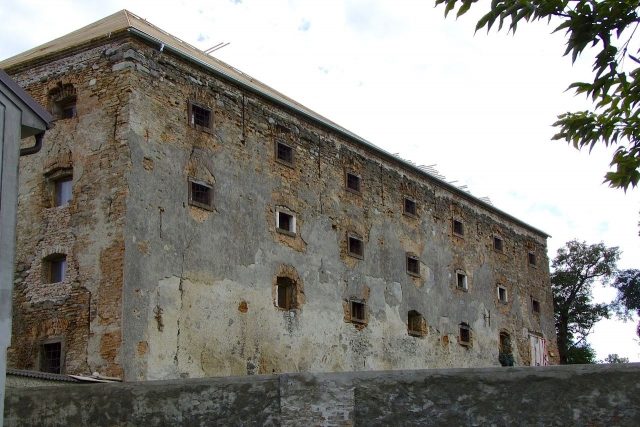
The origins of this former moated castle date back to the 12th century. Emperor Frederick I Barbarossa's crusader army gathered here in 1198, awaiting permission to pass through Hungary. The former moated castle played no role in this, but it must have existed for a long time. The castle was probably built as a border fortress by the Árpáds against Austria.
In 1264, the wedding of Béla IV to Kunigunde of Brandenburg, niece of Przemysl Ottokar II, took place in front of the castle. Six years later, the Bohemian king besieged the castle in a dispute over the Babenberg inheritance and finally destroyed it.
In 1363, the toll of Kittsee was pledged to the minor nobles Rudolf and Eglof Wolfart, who had immigrated from Germany. The defensive structure at that time was called Castrum Kuchhe. The toll soon gave rise to numerous complaints about violence and assaults. From 1390 to 1416, the lordship belonged to the Scharfeneckers. Afterwards, the castle was owned by the Hungarian King Sigismund, who passed it on as a pledge to the Wolfart-Rotenstein family. Kittsee belonged to Hungary with Burgenland until 1921.
In 1422, Peter Kapler was the pledge holder. In addition to the Counts of St. Georgen-Bösing (Sv. Jur-Pezinok), several minor nobles owned property here. Around the middle of the 16th century, Kittsee passed to Wolfgang von Puchheim through marriage.
In 1648, Kittsee was owned by the Listy brothers. At that time, the regional court was already associated with the lordship. In 1676, Kittsee passed to Palatine Paul I Esterhazy. During the time of the Turkish wars, the castle was probably no longer very defensible.
The Old Castle was renovated once more in 1730/40. The monogram F.P.F. on bricks found in the rubble indicates Prince Paul Esterhazy as the builder. However, the building was soon no longer inhabited, as Prince Esterhazy had simultaneously built the baroque New Castle.
Around 1870, the lordship was sold to the Batthyány-Strattmann family. The rear part of the Old Castle was largely destroyed by a bomb in the Second World War. No restoration took place. Tentative renovation attempts in 1966 were soon abandoned. The castle remained a ruin. Only the front part was inhabited for a longer period. It is in private ownership.
The three-story, four-winged building with an inner courtyard essentially dates from the 16th century. A spiral staircase in the rectangular courtyard and some windows also date from that period. In addition to the octagonal tower at the west corner, some brickwork from the late Middle Ages has been preserved. A late Gothic gate leads into the mighty cellar facilities. The vault in the cellar on the north front is supported by six square pillars made of ashlar stone. A large granary was built above it.
Take Mobile History with you
You are reading this text for free. Premium adds what matters on the road: descriptions read aloud, sites found through your camera, whole regions taken offline.
- Every description, including the ~17,700 Premium sites
- Audio guide: have descriptions read to you on location
- AR finder: see sites through your camera, with distance and bearing
- Unlimited saved sites
14 days free, then from €2.99 a month. Cancel anytime.
Source: Wikipedia · Licence: CC BY-SA 4.0 · Image: http://commons.wikimedia.org/wiki/File:Kittsee_Altes_Schlo%C3%9F-11.jpg?uselang=de
This description draws on the facts documented in the linked Wikipedia article; Wikipedia content is licensed under CC BY-SA 4.0. Wording and editing: Mobile History.
Location: 48.0930, 17.0673